Pilates builds a stronger core, better posture, steadier balance and more flexibility, and for a lot of people it lifts their mood too, as long as you keep it up over weeks. The research behind those benefits is real but modest, and the transformation reels oversell what a mat and a bit of floor can do.
That gap between the honest benefits and the marketing is worth knowing before you commit. Pilates earns its place as low-impact movement that goes easy on your joints and helps you move better in ordinary life. It won't melt fat or reshape your body in a fortnight, and no exercise will.
What Pilates is
Pilates is a slow, controlled form of movement built around the core and the breath. You work through precise repetitions, holding your middle steady while your arms or legs move, so the deep muscles that stabilise your spine and pelvis do most of the work.
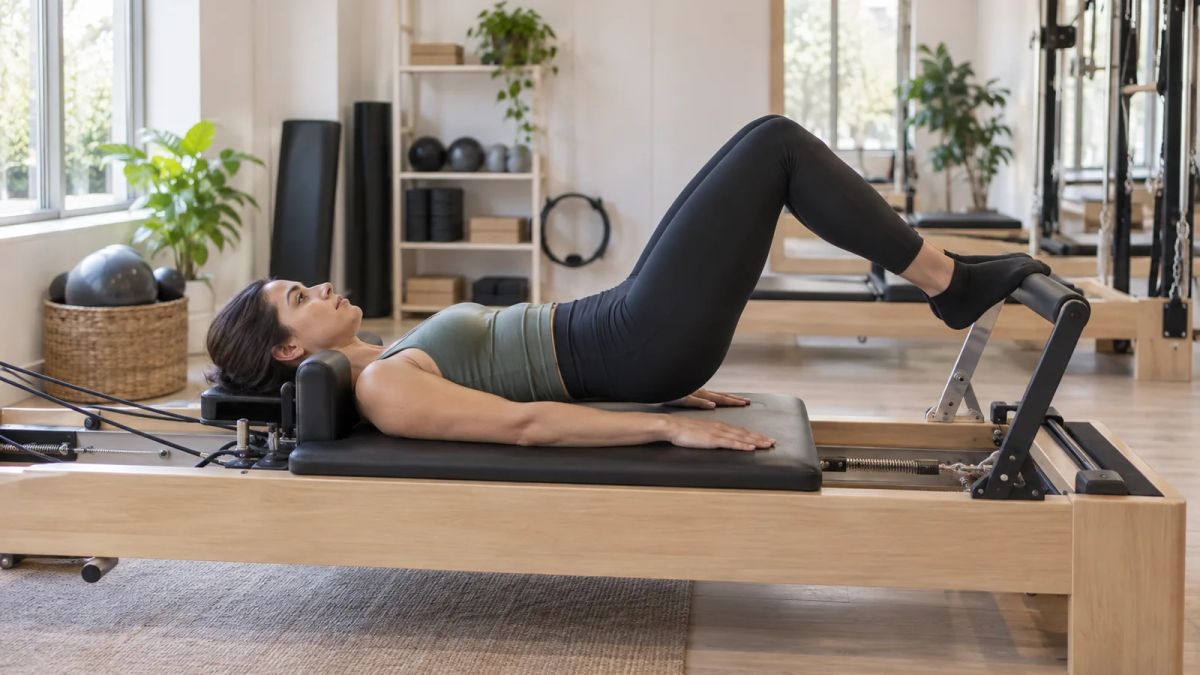
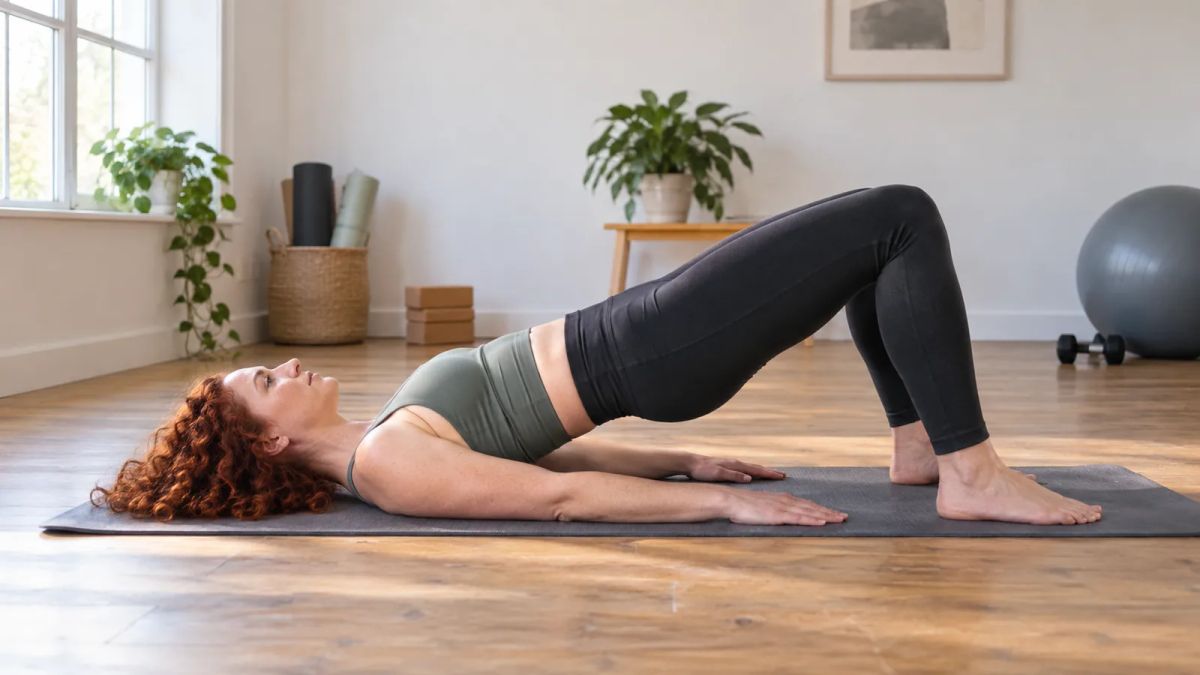
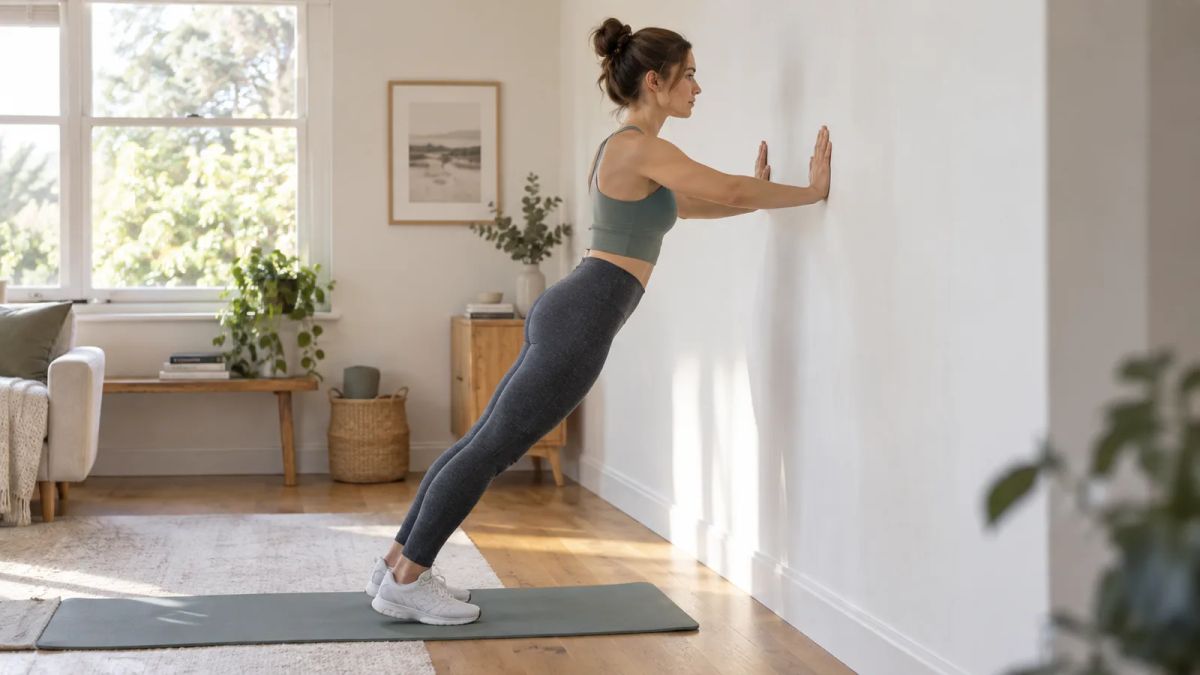
Joseph Pilates put the method together roughly a century ago. The version most people meet is mat Pilates, done on the floor with your own body weight. Reformer Pilates adds a sprung machine and wall Pilates uses a wall as a prop, but the idea underneath is the same across all three.
Cleveland Clinic describes it as a low-impact, full-body workout, and makes a point that surprises newcomers. The core is far more than your stomach. It takes in "your sides, your mid to lower back, your buttocks and your hips". Train all of that and ordinary movement gets easier.
The benefits the evidence supports
Most research studies Pilates as a whole, not one brand of class, so read the findings below as being about the method and not any single format. On that footing, here is where the evidence sits.
A stronger core. This is what Pilates is built for. Harvard Health says it targets "the muscles in the back, sides, pelvis, and buttocks that stabilize the center of the body". A steadier centre shows up in small ways, from standing up out of a low chair without pushing off the arms to carrying shopping without your lower back grumbling.
Better posture and body awareness. Cleveland Clinic links a strong, aligned core to easier good posture, and Pilates trains you to notice where your body sits in space. Desk workers tend to feel this one first, when the 4pm slump into rounded shoulders starts to loosen its grip.
More flexibility. There's a fair amount of stretching folded into Pilates, and improved flexibility turns up across the research as one of its more consistent results. Moving your joints through a controlled range, week after week, is what makes the change hold.
Steadier balance. This is where the evidence is strongest, especially for older adults. A 2023 systematic review and meta-analysis pooled 20 randomised controlled trials with 930 people and found Pilates improved balance, with a moderate overall effect and the clearest gains in dynamic balance, the kind you use when you're moving instead of standing still. Better balance lowers the risk of falls. The authors flagged that most participants were women, so the picture is thinner for older men.
Relief for lower back pain. Here the news is encouraging and cautious at the same time. A 2023 systematic review of eight trials with 437 people found Pilates was not inferior to equivalently dosed exercise for building core strength in people with chronic low back pain, and better than no exercise at all. The catch is worth repeating. The authors rated the certainty of that evidence as very low and called for larger, better trials. Treat it as a fair reason to try, not a promise about your back. Cleveland Clinic adds that Pilates can help back pain that comes from misalignment and a weak core, and not from tight muscles alone.
A lift in mood. This one has decent, if mixed, support. A 2026 systematic review in the journal Sports pooled 32 trials with 1,264 people and found Pilates significantly improved quality of life and self-esteem. Its effects on depression and anxiety came out limited or non-significant, and the studies varied so much that the reviewers warned against reading too much into any single figure. So Pilates isn't a treatment for a mental health condition. Moving with focus for half an hour does lift a lot of people though, and that counts on a heavy week.
Better sleep, for some people. A 2020 meta-analysis in Frontiers in Neurology pooled six randomised trials with 477 people and found Pilates improved sleep quality, cutting scores on a standard sleep questionnaire by about 3.6 points. The catch is who it helped. In healthy adults over 40 and in postmenopausal women, the improvement wasn't significant, and it made no difference to the use of sleeping tablets. If your sleep is poor, Pilates is a pleasant thing to add to a wind-down, and our guide to healthy sleep habits covers the bigger levers.
Where the evidence is thinner
Three honest caveats keep the rest in proportion.
The first is weight loss. Pilates runs at low to moderate intensity, so it burns some calories, far fewer than a brisk walk or a run. The CDC is blunt about the mechanics: getting to and staying at a healthy weight takes both regular activity and a healthy eating pattern, with most of the loss coming from eating fewer calories and activity helping you keep it off. Pilates can be part of an active week that supports a healthy weight. It isn't a fat-loss programme by itself, and no amount of ab work spot-reduces your stomach.
The second is bones. Pilates often gets listed as good for bone density, and the evidence there is thin. A 2021 meta-analysis in PLOS ONE looked at 11 studies of Pilates and yoga with 591 women aged 45 to 78 and found no significant improvement in bone density compared with control groups. Most studies ran for well under a year, which is short for bone, and the authors pointed out that holding density steady after menopause still counts as a good result. If bone health is your main goal, pair Pilates with some weight-bearing and strength work.
The third is certainty. A lot of the Pilates research runs on small groups over short timeframes, which is why reviewers so often rate the evidence as low. The benefits are steady enough to be worth your time. They're also slower and quieter than the before-and-after clips imply.
Who Pilates suits
Pilates adapts to a wide range of bodies. Cleveland Clinic calls it customisable "regardless of your age, sex, health status and fitness level", and that flexibility is a big part of the appeal.
It's a strong fit if you sit at a desk and feel it in your neck and lower back, you're easing back after a break or an injury, you want low-impact movement that's kind to sore joints, or you're an older adult wanting to protect your balance. Harvard Health highlights the low-impact nature as more comfortable for people with joint pain or mobility concerns, and points to gentler and seated versions for anyone who needs them.
It's less of a fit as your only exercise if you're after a big cardiovascular workout or heavy strength gains. Pilates sits alongside those. Cleveland Clinic suggests doing it three to five times a week and topping it up with cardio and strength training, not swapping them out. In the UK, the NHS counts Pilates as one of its muscle-strengthening activities, so two sessions a week can tick off the strength part of the guidelines, with 150 minutes of moderate activity such as brisk walking still to find elsewhere.
One safety note before you start. Pilates is gentle, but it's still exercise. Harvard Health advises checking with your doctor before any new form of movement, and says some exercises may not suit you if you already have back or spine problems. If you're pregnant, recovering from an injury or managing a health condition, take advice from a GP or a qualified instructor first, and stop anything that brings sharp or lasting pain.
Mat, reformer or wall: which to start with
All three are Pilates. The differences come down to equipment, cost and how much support you get.
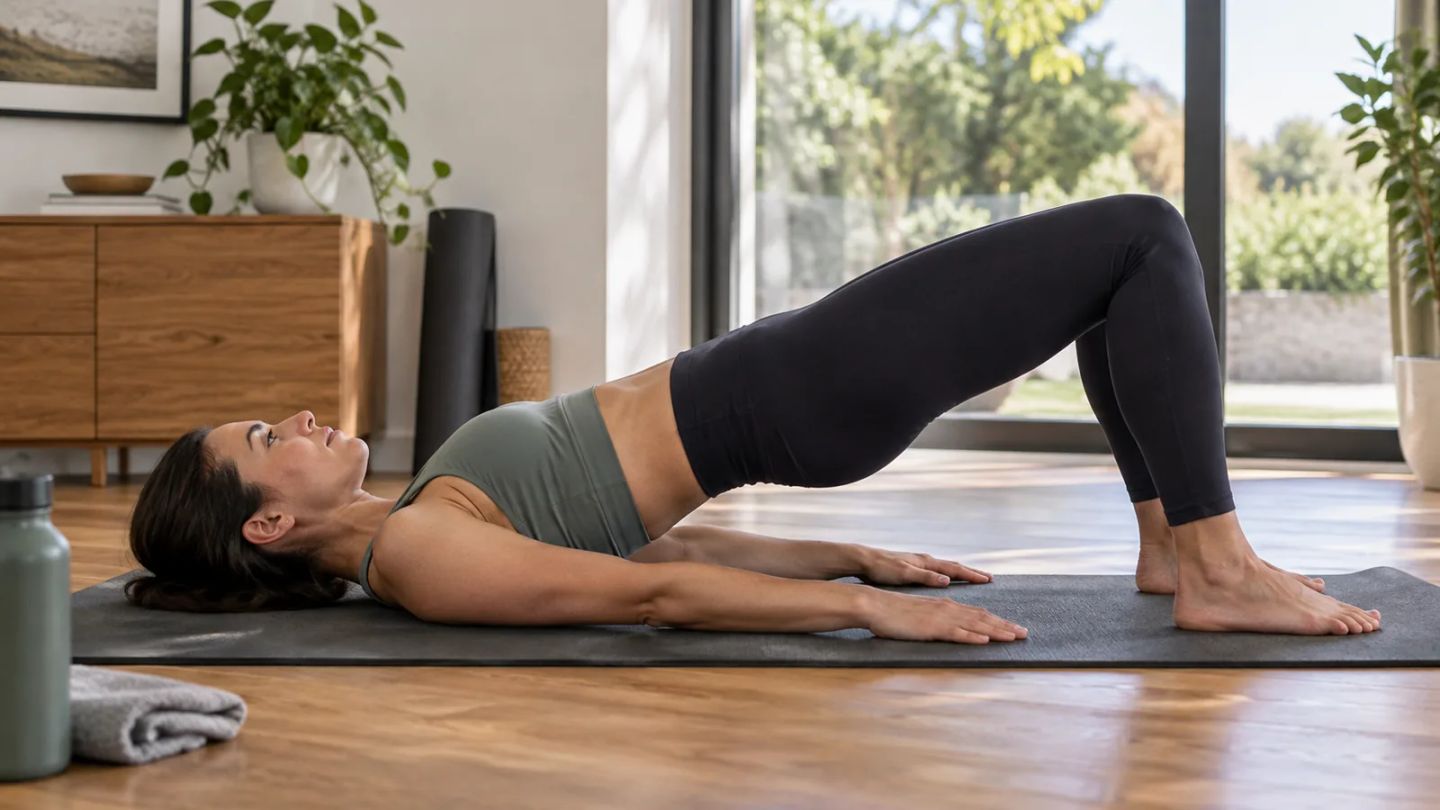
Mat Pilates uses your body weight on the floor and needs nothing but a mat. It builds strong foundations and costs the least, which makes it the easiest place to begin.
Reformer Pilates adds a sprung machine that lets an instructor dial the resistance up or down. Cleveland Clinic points out that working against gravity on a mat can be harder on your back than the supported reformer, so the reformer isn't the advanced option and the mat the beginner one. The machines are expensive, so most people pay per class. Our guide to the benefits of reformer Pilates covers the real cost and how to start.
Wall Pilates does mat moves with a wall as a prop, for support, feedback and a little resistance. It's a kind way in if you're new or wary of getting down to the floor and up again. We've looked at whether wall Pilates works and put together a followable set of nine wall Pilates exercises you can do at home.
There's also hot Pilates, a faster, interval-style class in a heated room. The heat makes it sweatier and tougher, but our look at the benefits of hot Pilates found little evidence it adds much beyond the Pilates itself.
The one you'll keep doing beats the one that looks best on paper. Pick on that basis.
How to start
You don't need a subscription or a month-long streak to begin. You need a mat, a bit of floor and a plan you can repeat.
- Start with a beginner class or a short beginner video, in person or online, so someone teaches you the basics before you chase a workout.
- Aim for two or three sessions a week to begin with, with rest days between, because muscles adapt on the days off.
- Let form lead. Pilates is slow on purpose, so move with control and keep your spine steady instead of rushing reps.
- Attach it to something you already do. James Clear calls this habit stacking, linking a new habit to one that's already built into your day, so "after I make my morning coffee, I do fifteen minutes of Pilates" holds better than a loose plan to fit it in somewhere.
- On a stretched day, shrink the session instead of skipping it. Ten minutes of the moves you already know keeps the thread going.
Miss a day, or a week, and pick it up at the next session. A gap doesn't undo the strength you've built.
Here's a simple first-month plan you can copy or print:
Pilates: first month (2 to 3 sessions a week, 15 to 30 min)
Week 1 ☐ Two beginner sessions. Goal: learn the basic moves and the breathing.
Week 2 ☐ Two or three sessions. Goal: get comfortable holding your core steady.
Week 3 ☐ Two or three sessions plus one short home stretch. Goal: notice your posture and balance.
Week 4 ☐ Two or three sessions. Goal: decide whether it earns a regular slot in your week.
Somewhere for Pilates to live
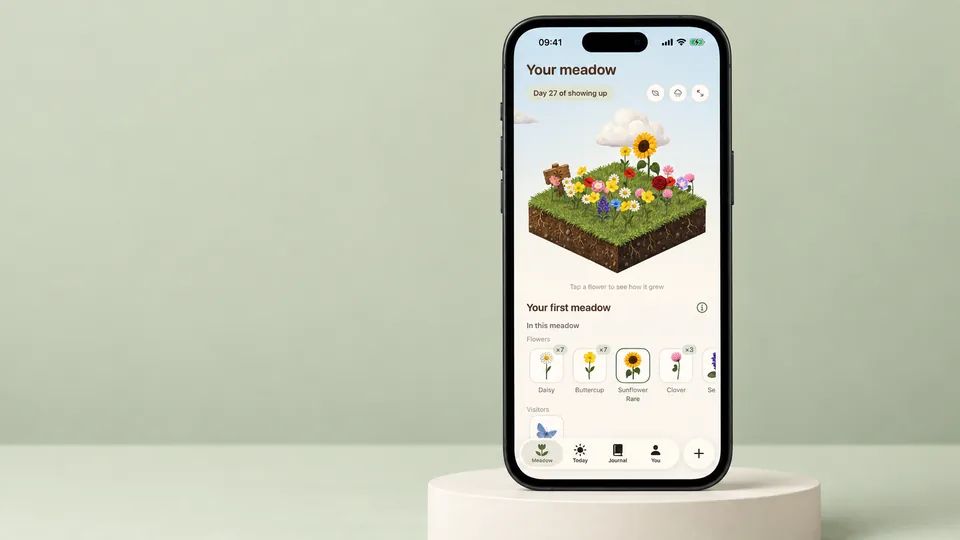
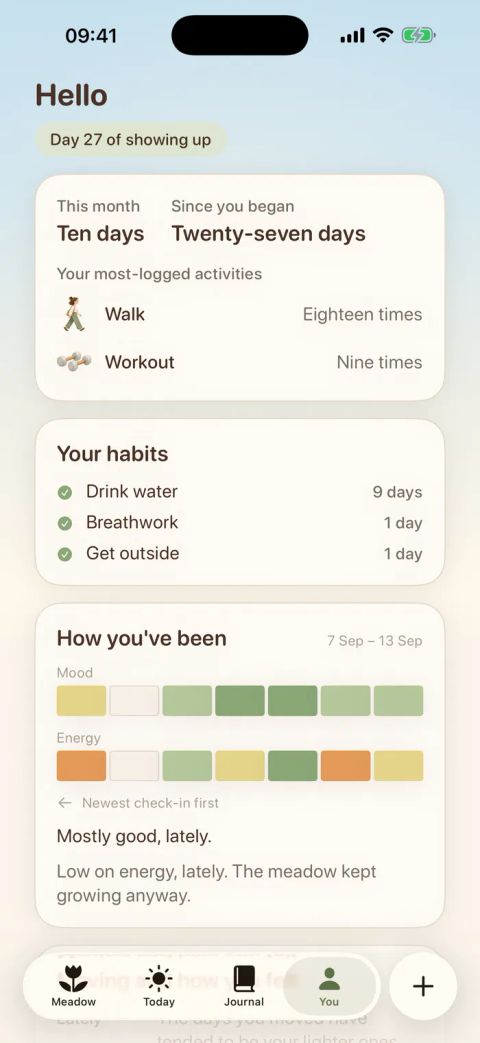
The benefits above all rest on the same unglamorous habit, coming back after the weeks you miss. Meadow is made for that. It's a gentle movement and habit app for iPhone where you log the movement you enjoy with a timer, a Pilates session, a walk or a few minutes of stretching, tick off small daily habits, and note your mood, energy and a daily win. Every day you show up grows a wildflower in your own meadow, and there are no streaks, so a rest week resets nothing and your flowers never wilt.
Frequently asked questions
What does Pilates do for your body?
It strengthens the deep core muscles that stabilise your spine and pelvis, improves posture, flexibility and balance, and can ease lower back pain. The balance benefit has the strongest evidence, especially in older adults. Done regularly, it makes everyday movement easier.
How often should you do Pilates?
Two or three sessions a week is plenty to feel benefits, with rest days between. Cleveland Clinic suggests three to five times a week alongside other cardio and strength work. A schedule you can keep beats a strict one you abandon by week three.
How long until you see results?
Expect changes in how you move and feel first, steadier balance, easier posture, a little more flexibility, within a few weeks of regular practice. Visible changes in muscle tone take longer and depend on your overall diet and activity, not a 28-day clock.
Can Pilates change your body shape?
It can change how you hold yourself and how firm your middle feels, and over months that shows. It won't lengthen your muscles or change your frame, and it can't remove fat from one spot. Any visible change in shape depends mostly on your overall diet and activity.
Is Pilates good for weight loss?
Not on its own. It burns some calories but far fewer than brisk walking or running, and weight loss depends mostly on how you eat. Pilates can be one enjoyable part of an active routine that supports a healthy weight.
Is Pilates good for beginners and older adults?
Yes to both. It's low-impact and adapts to most starting points, with gentler and seated versions available. The balance evidence is strongest in older adults. Check with your doctor first if you have any spine or joint concerns.
Which is better, yoga or Pilates?
Neither wins outright. Pilates leans towards core strength and control, and yoga leans towards flexibility, balance and breath, with plenty of overlap. Our Pilates vs yoga comparison sets them side by side to help you choose.
Do I need special equipment?
No. Mat Pilates needs only a mat and works at home. Reformer classes use a machine and cost more per session, and wall Pilates uses a wall you already have. Start with whichever is easiest for you to keep up.
Pick one 20-minute beginner session this week, a class or a video, and do it straight after something you already do each morning. That's enough to feel what Pilates does, and enough to decide whether it earns a regular place in your week.
AUTHOR
Co-founder of Meadow.
Ash is co-founder of Meadow, a habit and movement tracking app that turns small acts of self-care into a growing wildflower meadow.
See how far you've come
Your habits, moods and little wins, all in one place
Meadow keeps track of the walks, the water and the good days, so you can look back and watch your effort add up.
Download Meadow