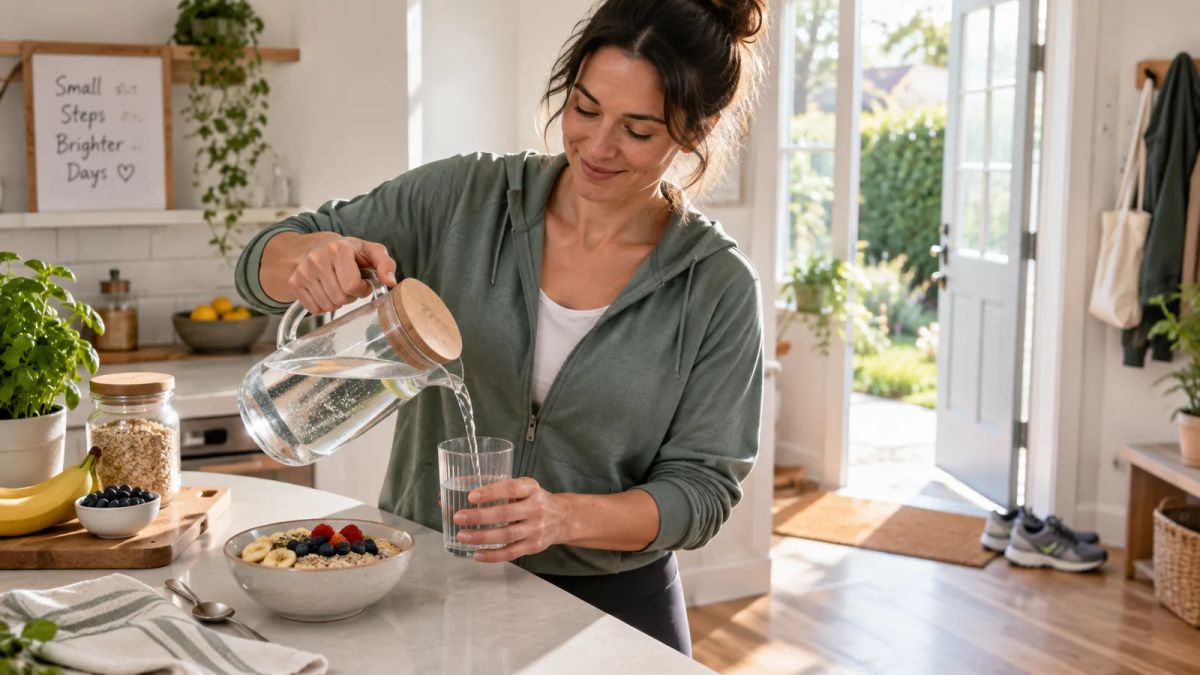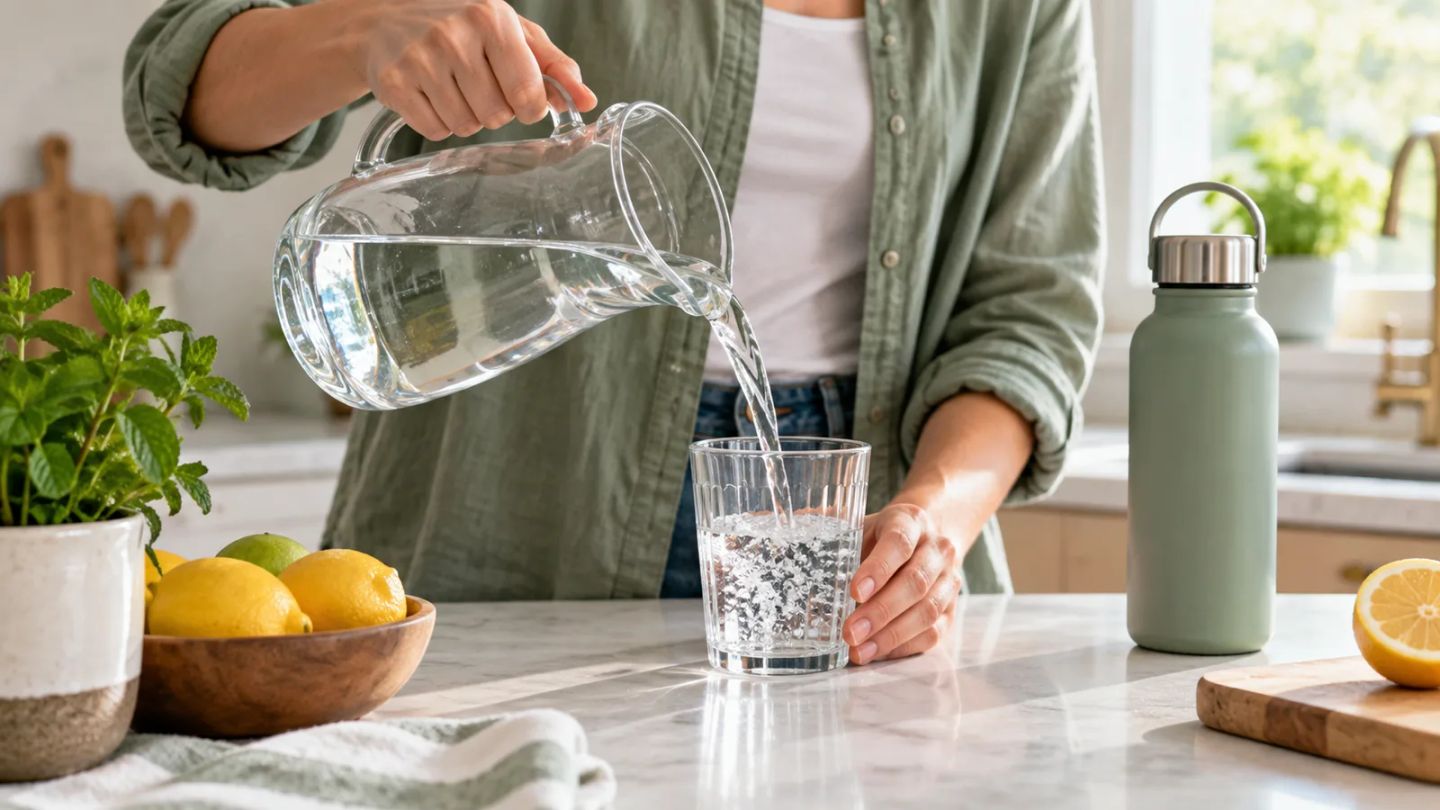
The most reliable way to drink more water is to stop aiming at a daily number and start attaching a drink to things you already do. A glass after you brush your teeth, one poured when you sit down to eat, one while the kettle heats up. Each of those moments turns up on its own, so the water rides along with a cue instead of depending on you remembering out of nowhere.
If you have ever decided to drink more and forgotten by mid-morning, willpower was probably never the issue. A vague plan to "drink more water" gives the day nothing to hold on to. A plan that says "a glass when I make my morning coffee" points at an exact moment, and an exact moment is far easier to keep.
This guide covers how much you need without the myths, the signs you might be running low, the tactics that hold up in a busy life, a ready-made cues checklist you can start with today, and a short plan for the days it all goes sideways.
How much water do you need
Here is the honest answer the "eight glasses a day" rule skips over: it depends on you, and no single figure fits everyone. The eight-glasses idea is easy to repeat and has stuck around for decades, but Harvard's Nutrition Source notes it may not be right for every person and that published intake figures are "a general guide" rather than a daily target.
Those figures come from the National Academy of Medicine, cited by Harvard as roughly 13 cups a day for men and 9 cups for women, where a cup is 8 ounces. In the UK, the NHS frames it more loosely as 6 to 8 cups or glasses of fluid a day. The two look different because one counts total fluid across the day and both are averages, not lines you have failed to cross.
The part that changes everything about the maths is what counts, and it is more than water from a glass.
- Tea and coffee count. Despite the old worry about caffeine drying you out, Harvard notes caffeinated drinks including coffee and tea contribute to your total daily fluid.
- Milk, sugar-free drinks and diluted squash count too, according to the NHS.
- Food counts. Harvard estimates about 20% of total water intake comes from water-rich foods rather than drinks, so fruit, vegetables, soup and yoghurt are quietly topping you up.
What that means in practice: the cup of tea you were going to have anyway, the water-heavy lunch, the glass with dinner. They are already part of your intake before you try at all. Your needs also shift with the weather, how active you are, whether you are pregnant or breastfeeding, and your own body, which is why a range beats a fixed litre count. If you have a heart or kidney condition, or take medication that affects fluid, follow the advice from your GP rather than a general figure, because for some people more is not better.
Signs you might need more
Your body gives you feedback long before anything dramatic. The most practical everyday signal is the colour of your urine. Pale straw suggests you are drinking enough, and darker, more concentrated urine is a nudge to have a drink.
Thirst is the obvious one, though it lags behind, especially as people get older and the thirst signal fades. So thirst is a useful prompt rather than the only one worth waiting for.
Being low on fluid can show up in ways people rarely connect to water. The CDC lists effects of dehydration including unclear thinking, mood change, overheating, constipation and kidney stones. Research points the same way. A randomised trial in young adults found that after a long stretch without water, fatigue and total mood disturbance rose while vigour dropped, and drinking 500 to 1000 ml improved both mood and some measures of memory and processing speed. That study used a deliberate long period of restriction, so it is not proof that a slightly dry afternoon is wrecking your focus, but it does show fluid and how you feel are linked. If you often feel foggy or headachy in the late afternoon, a glass of water is a cheap thing to rule in or out.
None of this is a diagnosis. Ongoing tiredness, frequent headaches or a lasting change in how much you need to drink are worth a conversation with your GP rather than a bigger bottle.
Tactics that hold up in a busy life
Plenty of advice tells you to want it more. These tactics lean on your environment and your existing routine instead, so they keep working on the days your motivation does not turn up.
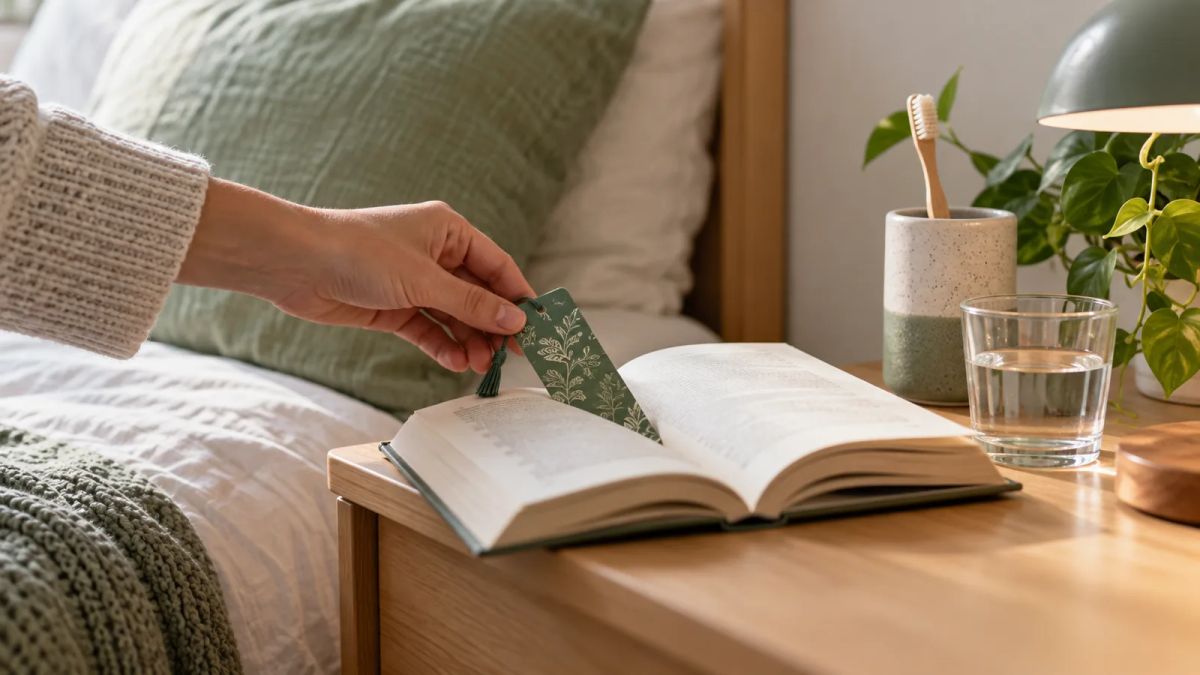
Attach each drink to a cue you already have. A cue is something that happens at a predictable moment, so you borrow a slot that exists rather than inventing a new one. The American Heart Association describes pairing a new action with an established routine as one of the more dependable ways to make a change stick. Good cues are hard to miss: the first thing in the morning, sitting down to a meal, boiling the kettle, getting in from work, starting a meeting. Pick two or three and pair each with one drink. This is the same logic behind a lot of tiny habits that outlast big resolutions.
Make the water visible and within reach. A bottle on your desk, a glass left by the tap, a jug in the fridge. Friction is the quiet killer of small habits, and every step between you and a drink is a chance to not bother. If the water is already there when the cue arrives, you drink it.
Size the bottle to your day, not to a challenge. A big bottle is helpful if seeing it drain gives you a sense of progress, and refilling a known size once or twice makes the day's total easy to picture. It is a burden if it is too heavy to carry or so large it becomes a chore you avoid. A bottle you refill twice beats a giant one you leave at home.
Swap one sugary drink, not all of them. The CDC points out that water has no calories, so replacing a sugary drink with water lowers what you take in without any effort to eat less. Changing one habitual soft drink or juice for water or sparkling water is an easier target than a total overhaul, and it does two jobs at once.
Make plain water more appealing. If you find water boring, that is a fixable problem, not a character flaw. A wedge of lemon or lime, a few slices of cucumber, a sprig of mint, or switching to sparkling water can be the difference between a full glass and a forgotten one.
Use reminders and apps as scaffolding, not the whole structure. A phone alarm or a habit app can carry you through the first couple of weeks while the cue does the heavy lifting later. Monitoring your own progress is a well-supported way to stick with a goal, so a simple tick each day is worth more than it looks. The aim is to lean on the reminder until the cue itself is enough.
A daily water cues checklist
Here is a real checklist you can use, not a vague suggestion to "stay hydrated". Pick the cues that match your actual day, ignore the rest, and tick a box each time the water follows the cue. Print it, or copy it into your notes.
Blank version to fill in:
My water cues
☐ First cue: __________ then a glass of water
☐ Second cue: __________ then a glass of water
☐ Third cue: __________ then a glass of water
Mon ☐ Tue ☐ Wed ☐ Thu ☐ Fri ☐ Sat ☐ Sun ☐
A filled example for a typical weekday:
My water cues
☐ First cue: after I brush my teeth, then a glass of water
☐ Second cue: when I sit down for lunch, then a glass of water
☐ Third cue: while the kettle boils at 4pm, then a glass of water
Mon ☑ Tue ☑ Wed ☐ Thu ☑ Fri ☐ Sat ☐ Sun ☐
Three cues spread across the day will do far more than an ambitious plan you drop by Tuesday. If three feels like a lot, start with one and add the others once it holds. For more ideas on what to log alongside it, see our list of habits worth tracking.
Common myths, cleared up
"Everyone needs eight glasses or two litres a day." A useful rough guide for some, a poor rule for all. Intake references are averages, food and other drinks count towards the total, and individual needs vary day to day.
"Coffee and tea dehydrate you, so they do not count." They count. The mild diuretic effect of normal amounts of caffeine does not cancel out the fluid, and Harvard includes coffee and tea in daily fluid intake.
"If you feel thirsty you have already left it too late." Thirst is a normal, useful prompt, not a sign of a crisis. It does become less reliable with age, which is a reason to lean on cues and urine colour as well, rather than a reason to panic at the first dry mouth.
"More is always better." For most healthy people, drinking a bit more when urine is dark is sensible. Drinking far beyond thirst is not a health upgrade, and for people with certain conditions it can be a problem, which is where GP advice matters.
Keeping track without it becoming a chore
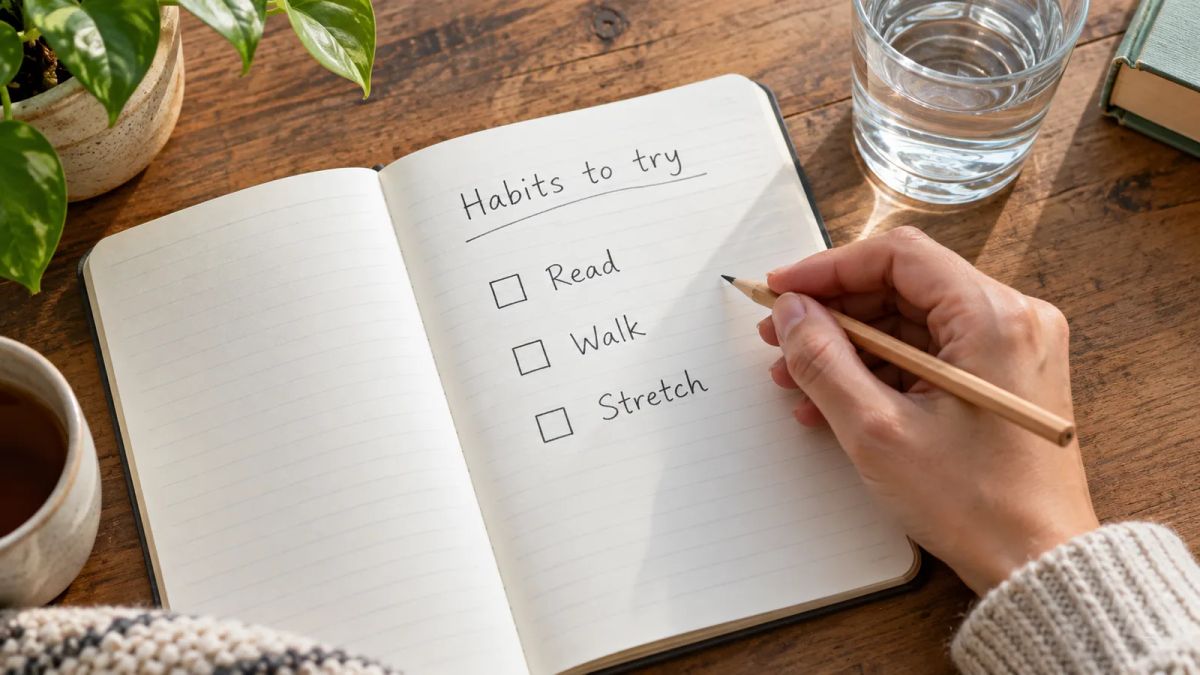
Some people keep going more easily when they can see the days stacking up. That can be a tick on a calendar by the kettle, a note in an app you already open, or the checklist above. Seeing the pattern gives you a small hit of "done" and shows you exactly where the gaps are, which beats guessing. It pairs well with any healthy habits you are already building.
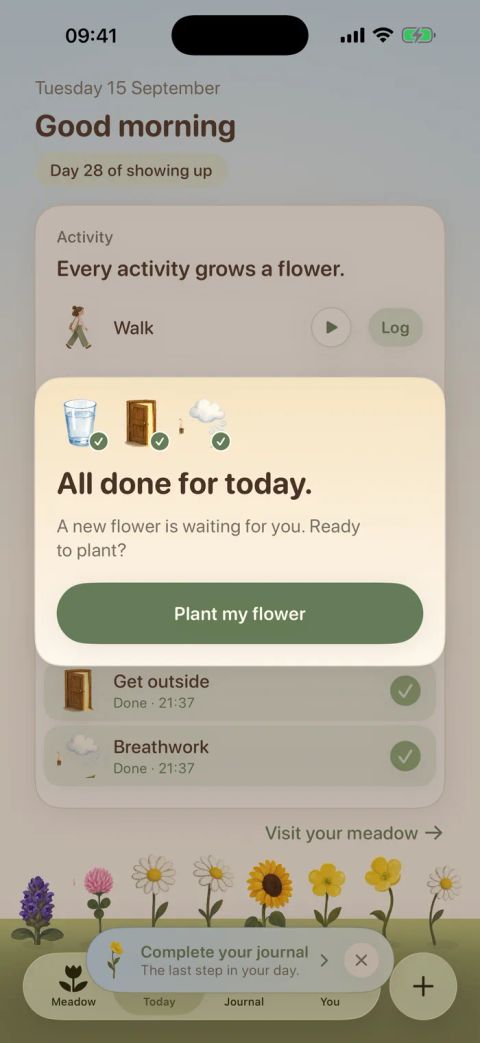
Tick off a water habit in Meadow
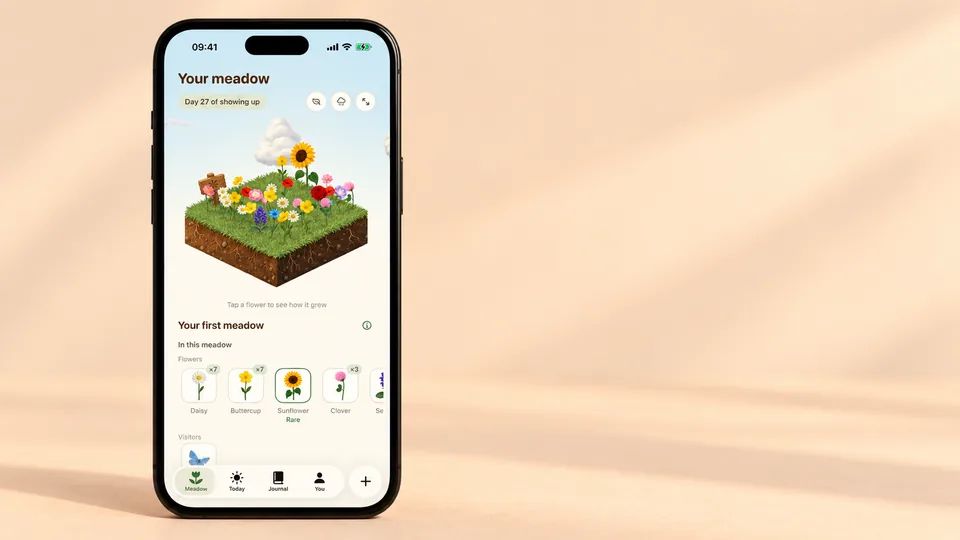
Another app worth checking out is Meadow, a gentle habit tracker for iPhone made by Wildcard Wellness, because it treats a missed day kindly. You tick off a water habit after a cue you have chosen, such as finishing lunch, log a little movement you enjoy and note your mood and a daily win, and every day you show up grows a wildflower, with rare flowers and small animal visitors turning up over time. There are no streaks, so a missed day resets nothing and your flowers never wilt, which fits the pick-it-up-again approach far better than a counter that shames you. Meadow costs $39.99 a year or $9.99 a month after a seven-day free trial. If you prefer something you keep in your pocket, this is a soft, calm option worth a look.
A simple starter plan
You do not need the whole guide to begin. Start here.
- Choose one cue that happens every single day, such as making your morning coffee.
- Decide the exact drink that follows it: a full glass of water, right then.
- Put a glass or bottle where that cue happens, so the water is already waiting.
- Do only that for a week, and tick it off each day.
- When it feels automatic, add a second cue, then a third.
A smaller version for the hard days. Some days the full set will not happen, and it helps to plan for that before it arrives. On a stretched day, keep one cue and drop the rest. The glass with lunch, and nothing else. One deliberate drink still counts and keeps the thread alive, so there is something to build back from. Missing a single day does not undo your progress either. A well-known study following people forming daily habits found that one missed opportunity did not derail the process, even though it can feel like a collapse from the inside.
How to restart after it slips. If a few days go by and the water has fallen away, pick it up at the very next cue rather than waiting for a fresh Monday. The next time you make a cup of tea, pour a glass alongside it. Refill the bottle and put it back on the desk. Lean on the one cue that felt easiest before, then add the others once it is steady. You are returning to something you have already done, not starting from zero.
One thing to do today
Pick a single cue that already happens every day, then decide the exact drink that will follow it. "A glass of water when I sit down for lunch" is enough to begin. Put a glass or bottle where that cue happens so the water is waiting, and let a moment you already have do the remembering for you.
Every little bit counts
Five minutes counts. So does a dance in the kitchen.
Log the movement you enjoy and the small habits that help you feel good, and watch them bloom into something you can see.
Join the Meadow waitlist