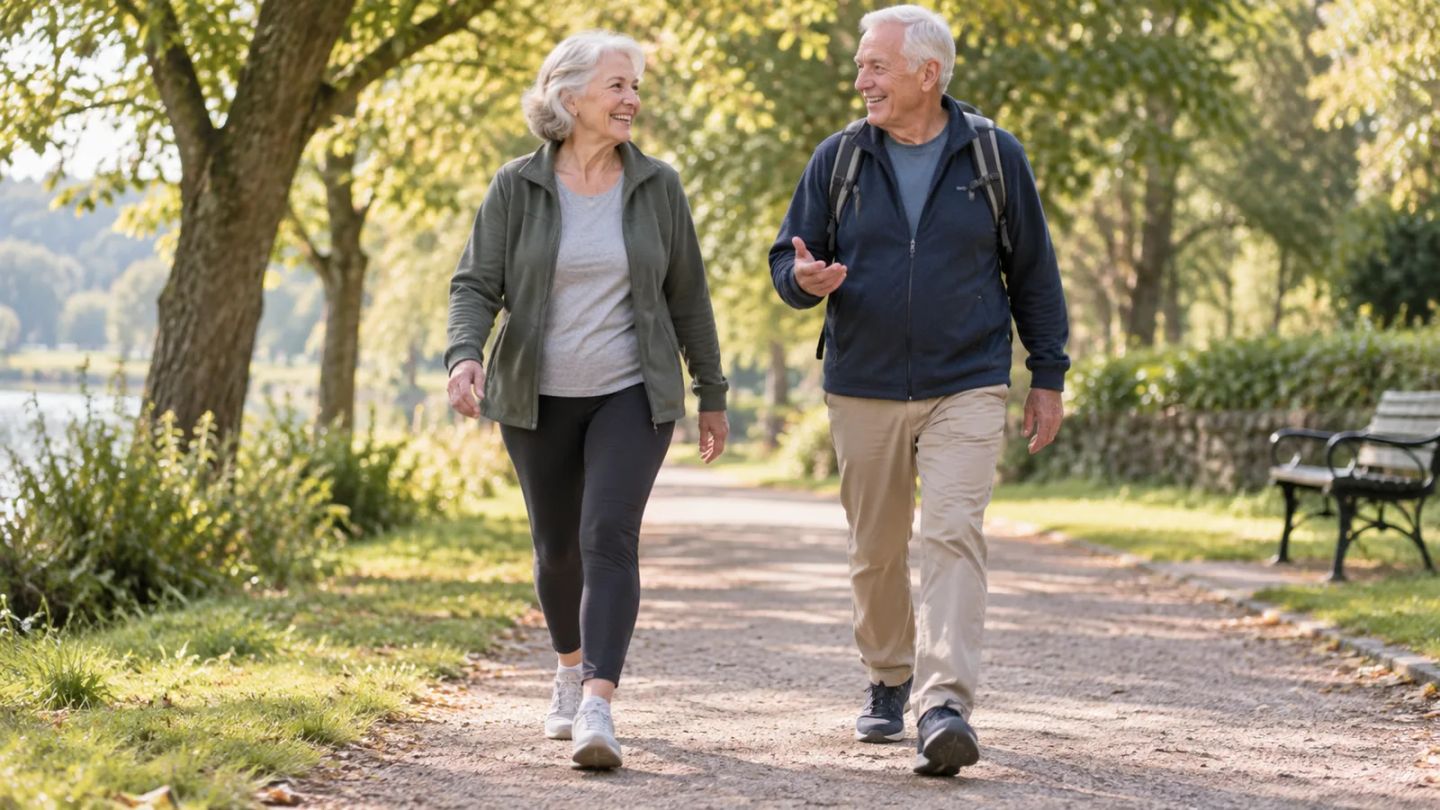
A daily walk is one of the most reliable things you can do for your health, and the returns show up across your heart, your blood sugar, your joints, your bones and your mood. None of it needs a gym, special kit or a spare hour, which is part of why walking holds up when more demanding plans fall away.
The rest of this piece is the plain version. What a walk does well, what it cannot do on its own, how much and how brisk to aim for, and how to fit one into a week that is already full.
What a daily walk does for your body
Start with the heart, because that is where the evidence is steadiest. A systematic review of organised walking groups found that people who took up regular walking lowered their systolic blood pressure by about 3.7 mmHg and their diastolic by about 3.1 mmHg on average, alongside a small drop in resting heart rate. The same review recorded almost no adverse effects across tens of thousands of hours of walking, which counts for a lot in something you are meant to do most days.
Blood sugar responds too, and you do not need a long session to see it. A meta-analysis of short activity breaks showed that light walking, in bursts as brief as two to five minutes, blunted the rise in blood glucose after meals more than either sitting or standing did. A slow amble round the block after lunch is doing something measurable.
Walking is kinder to joints than many people expect, especially those wary of sore knees. Most joint cartilage has no blood supply of its own and draws its nutrition from the fluid that circulates when you move. The Arthritis Foundation explains that the gentle compression of each step helps push oxygen and nutrients into that cartilage, and the same charity points to a study of post-menopausal women in which 30 minutes of daily walking was linked to a 40% lower risk of hip fracture. Weight-bearing movement is one of the ways bone holds its strength as you age.
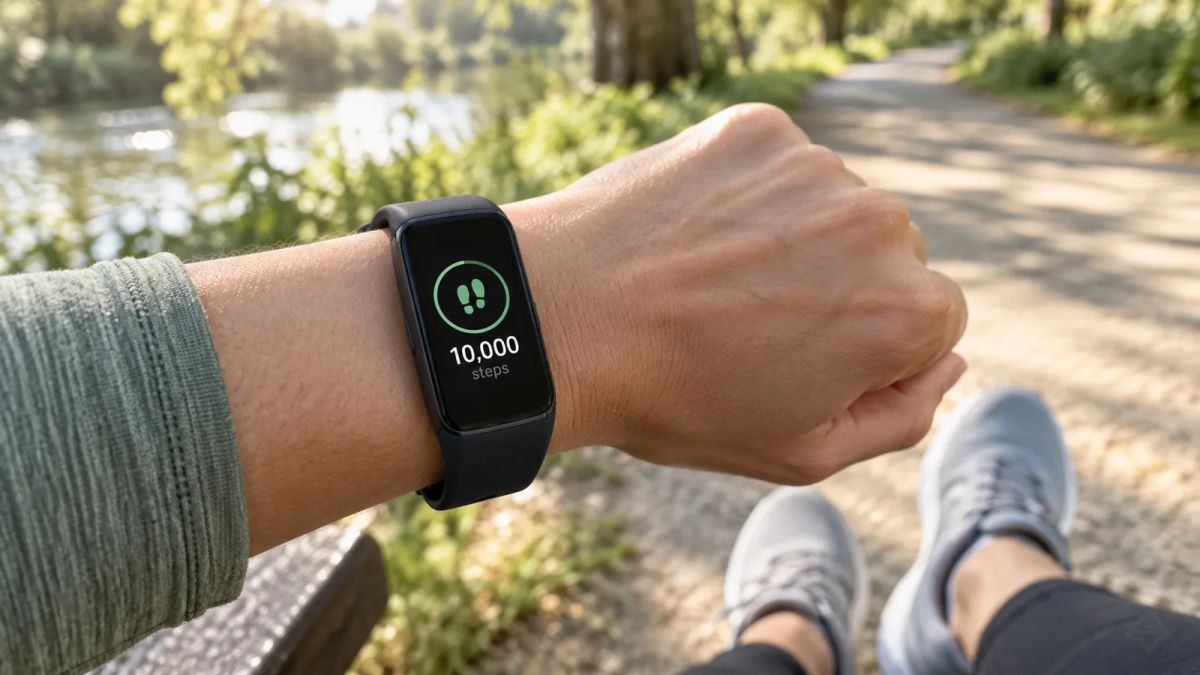
Then there is how long you live. A meta-analysis of 15 international studies following nearly 50,000 people found that taking more steps a day was associated with a progressively lower risk of dying over the follow-up period, with the benefit levelling off at roughly 6,000 to 8,000 steps for adults over 60 and 8,000 to 10,000 for younger adults. That sits well below the 10,000 that gets quoted as gospel. If you want to unpick the number itself, our guide to how many steps a day goes deeper.
These are associations drawn from large groups, not promises about your particular week. Walking is one of the activities that puts you in the healthier group, which is a fair reason to keep at it.
What a daily walk does for your mind
The mental returns are as well documented as the physical ones. A 2024 review of 33 studies covering more than 96,000 adults reported that people averaging 7,000 or more steps a day had around a 31% lower risk of depression than those walking less, with each extra 1,000 steps linked to lower risk again. This is observational work, so it cannot prove the walking caused the difference, but the pattern is consistent and it points the right way.
A walk will not fix a hard day, and it is no replacement for treatment when you are struggling. What it tends to be is a small, repeatable thing that helps rather than harms, and a short one outdoors often takes the edge off stress and leaves you calmer than you started. If low mood or anxiety hangs around, speak to your GP alongside anything you do for yourself.
There is a steadier immune effect worth noting. Harvard Health describes research in which people who walked at least 20 minutes a day, five days a week, had 43% fewer sick days than those who exercised once a week or less, with milder symptoms when they did catch something.
Walking may help the mind stay sharp as well, though the evidence here is softer. A review of walking and healthy ageing links regular walking to lower risks of cognitive decline and type 2 diabetes, while making clear these are associations rather than guaranteed outcomes.
What the evidence does and does not show
Walking is often sold as a way to shed pounds, and that is where the claims tend to outrun the science. Movement burns energy, but body weight depends on far more than steps, including how you eat, how you sleep, your medication and health conditions you do not control. The CDC notes that the amount of activity people need varies a great deal from one person to the next, and it stops short of promising any set result. Walk because it makes the rest of your life feel steadier, and let any change on the scale be a side effect rather than the point.
Being clear about the limits protects the habit. A daily walk will not cancel out long hours of sitting on its own, and it works best next to sleep, food and the care you already get, rather than in place of them. That is not a reason to skip it. It is a reason to keep your expectations fair, so a good habit does not start to feel like failure when your body or your life does something a walk cannot fix.
How much walking, and how brisk
Pace changes what you get, and the test for it is easy to carry. The NHS calls a walk brisk when you can still talk but cannot sing the words to a song, which works out at around three miles an hour, faster than a stroll. That test adjusts to how you feel on the day, which no speed on a screen can do.
For the week as a whole, NHS guidance for adults aged 19 to 64 suggests at least 150 minutes of moderate activity, or 75 minutes of vigorous activity, plus strengthening on two or more days. Brisk walking is moderate activity, so three brisk walks of around 25 minutes cover most of it. If you want more intensity without more time, our explainer on Japanese walking sets out a simple interval method that adds hard and easy stretches to a walk you were taking anyway.
If you have not been active for a while, or you live with a health condition or any concerns, the NHS advises a word with your GP before you build up, because a general target cannot account for your situation. Add the distance gradually rather than all at once.
Fitting a walk into a real day
The best walk is the one that survives a normal week, not the one that needs a free hour you rarely have. Some of the most durable walking hides inside things you already do, like part of the commute, the trip to the shops, or the stairs in place of the lift. None of it reads as exercise, which is part of why it lasts.
Attaching a walk to something fixed helps it hold. James Clear calls this habit stacking, using the shape "after [current habit], I will [new habit]", so an existing routine becomes the cue. A walk after you drop the children at school, or straight after lunch, or during a call you would have taken sitting down, asks less of your memory than one you have to summon from nowhere. Our habit tracker guide has more on making a cue stick.
On a stretched day, shrink the walk rather than drop it. Five minutes to the end of the road and back is a real walk, and it keeps the habit alive on the days that would otherwise break it. Shift work, caring, pain, or a route that feels unsafe after dark can all move a walk around, so pick the version that fits the day in front of you. A short walk you took beats a long one you planned and missed.
Meadow, without the streak
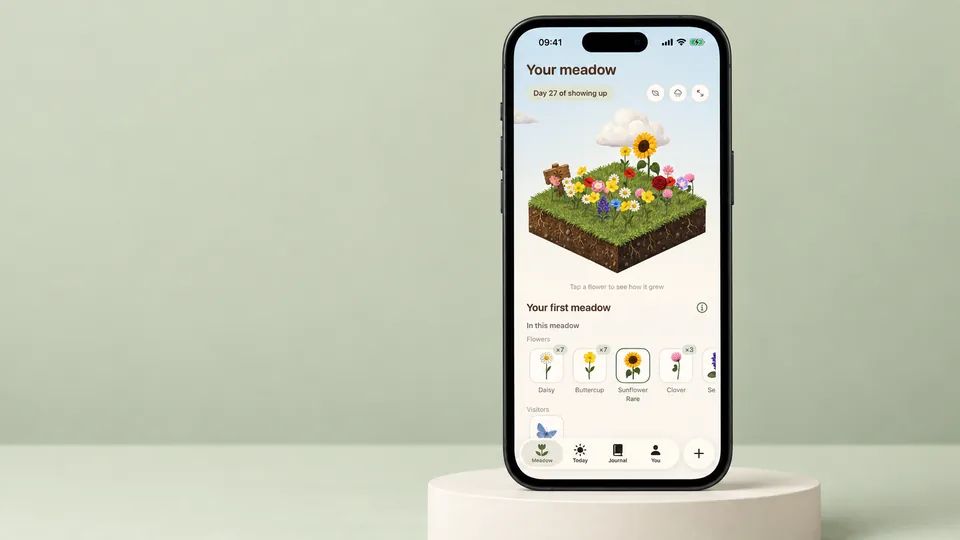
Seeing your walks add up can be the thing that keeps you going, and a plain record does most of that work. A tick on a wall calendar counts. So does an app.
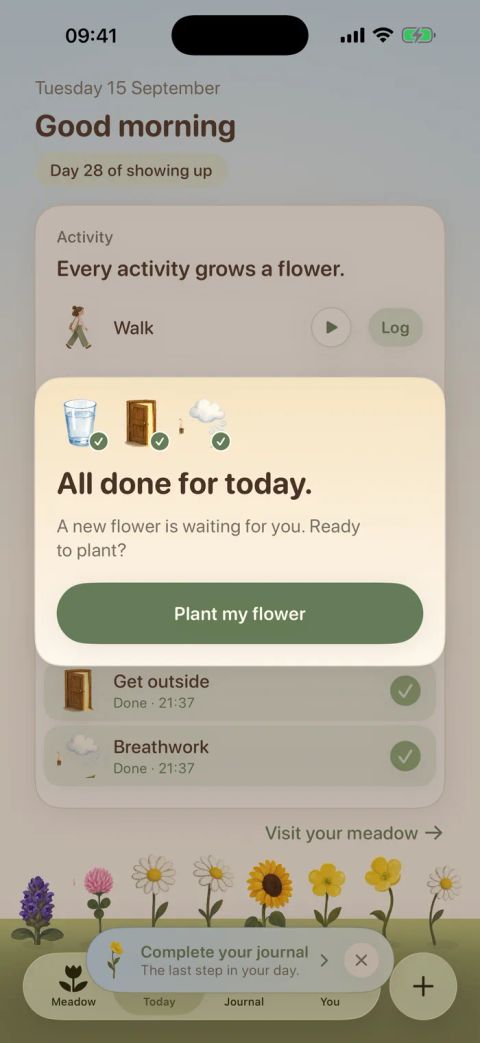
Another app worth checking out is Meadow, because it is built around showing up rather than never missing. It is a gentle habit tracker for iPhone from Wildcard Wellness, with walking as one of its built-in activities, so you can log a walk, note your mood and a small daily win, and watch a wildflower grow for each day you move. There are no streaks, so a missed day resets nothing and your flowers never wilt. Meadow costs $39.99 a year or $9.99 a month after a seven-day free trial.
Keeping going after a missed day
Missing a day matters far less than people fear. A study of how everyday habits form found that one missed occasion did not stop a habit taking hold, and that the time it takes to feel automatic varies widely from one person to the next. There is no streak to protect and no tidy number of days after which a walk turns effortless. When you miss one, take the next chance rather than trying to make up the lost distance.
Common questions
Is walking enough exercise on its own?
For a lot of people, most of the time, a regular brisk walk does most of the heavy lifting. It can carry you to the weekly 150 minutes of moderate activity the NHS suggests, and it lowers blood pressure and supports mood and blood sugar along the way. The one gap is muscle and bone strength, which walking helps but does not fully cover, so the guidance adds strengthening work on two days a week. A couple of short sessions of bodyweight moves, or carrying the shopping, sits neatly beside your walking.
Is walking better than running?
Neither is better in the abstract, they suit different bodies and different days. Running packs more intensity into less time, while walking is easier on the joints, easier to keep up for years, and far more likely to happen when you are tired or busy. The activity you will still be doing next month is the one that pays off, and for many people that is a walk.
When is the best time to walk?
The best time is the one you will keep. That said, a short walk after a meal has a specific perk, since light movement blunts the rise in blood sugar that follows eating. A morning walk can help set the day, and an evening one can wind it down. Fit it to your life rather than the other way round.
How many steps should I aim for?
The evidence on living longer points to a benefit that builds up to roughly 6,000 to 8,000 steps a day for older adults and 8,000 to 10,000 for younger ones, rather than a magic 10,000. If you are starting low, adding a few thousand steps to where you are now is the move that matters most. Our guides to how many steps a day and 10,000 steps a day go through the numbers.
One thing to do today
Pick one fixed point in tomorrow that already happens, your morning coffee, the school run, the end of your shift, and add a short walk straight after it. That is a walking habit starting, with none of the pressure a target would bring.
Every little bit counts
Five minutes counts. So does a dance in the kitchen.
Log the movement you enjoy and the small habits that help you feel good, and watch them bloom into something you can see.
Join the Meadow waitlist