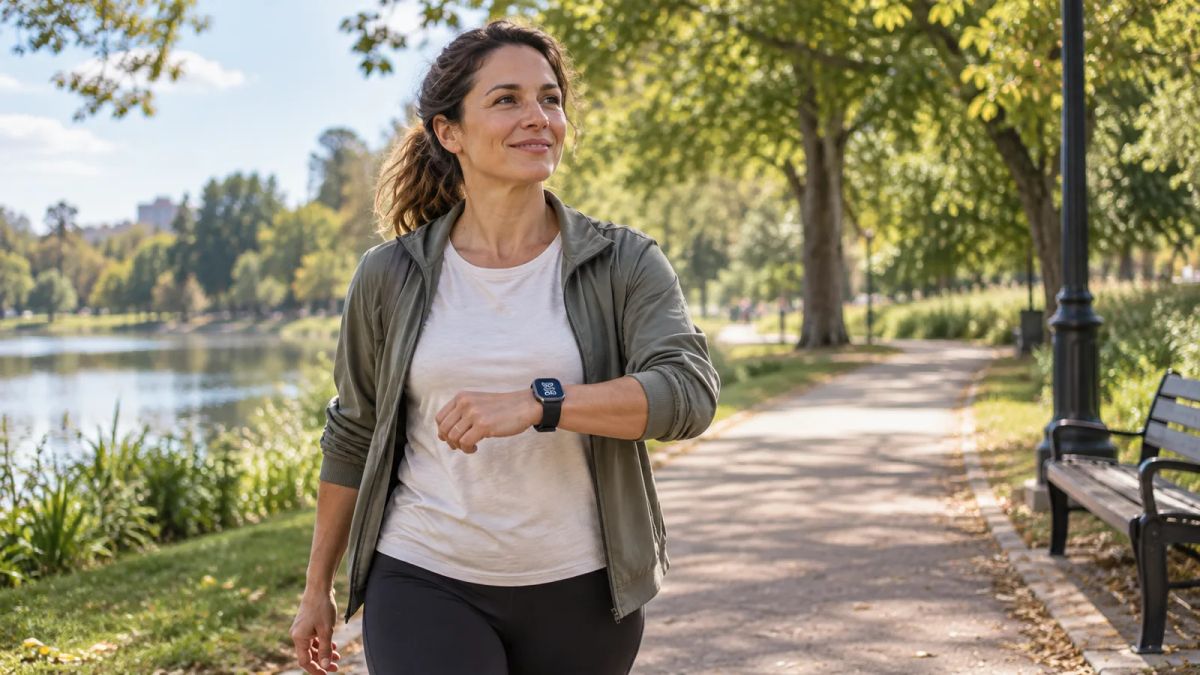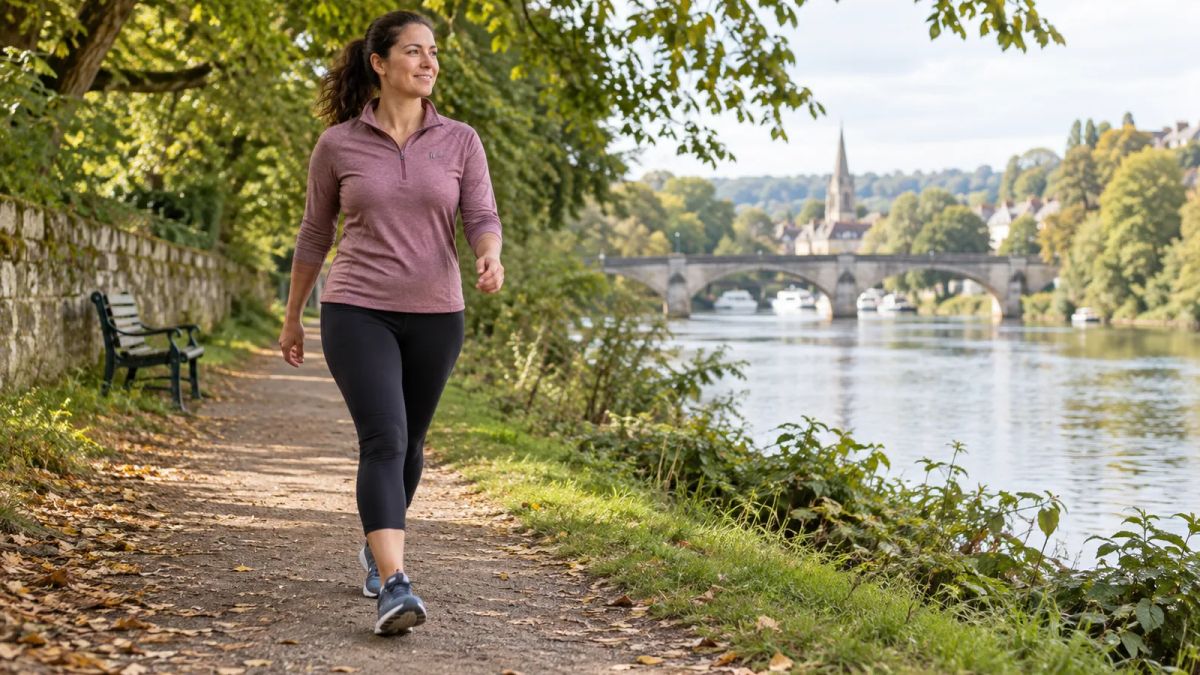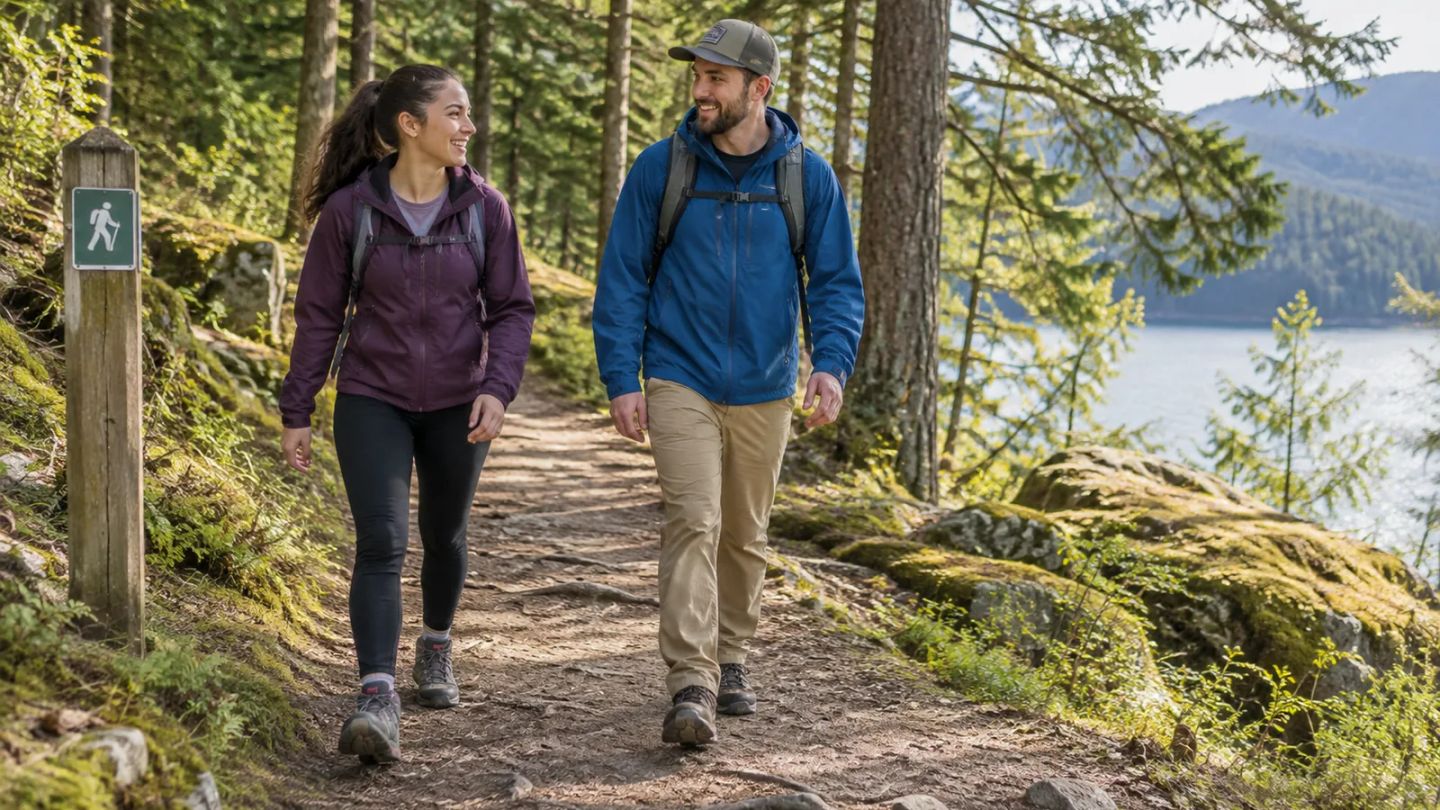
A hike is a walk with a bit more to it, usually longer, often on rougher ground, and somewhere greener than the pavement outside your door. You can start this weekend with trainers you already own, a bottle of water and a route that takes under an hour, then build from there.
There's no exam to pass first.
The rest of this guide covers how to pick a first route, what to wear and carry, how to stay safe, how to build up, and what a regular hike does for your body and mind once it sticks.
What counts as a hike
Nobody polices the line between a walk and a hike, so don't get stuck on the word. A flat loop round a country park counts. So does a stony path up a hill, a coastal trail, or a wooded circuit with a few muddy stretches. What tends to make something feel like a hike is the setting and the length, not a badge you earn at a certain distance.
Most people starting out are doing a day hike, which means you set off and come back the same day with a small pack. You don't need mountains, a club, or a free weekend you never have. A local trail you can reach on the bus is a fine place to begin.
Choosing your first route and distance
Start shorter than you think you should. The American Hiking Society advises beginners to pick relatively short trails with low elevation gain and build up gradually, and that's the safest way to find out what your legs and lungs are happy with. A couple of miles on easy ground is a real hike and a sensible first one.
When you're weighing up a route, look at four things:
- Distance, kept modest for the first few outings so you finish with energy to spare.
- Elevation gain, because a hilly two miles can be harder work than a flat five.
- Terrain and how well the path is marked, since a clear, well-trodden trail is easier to follow and easier to leave.
- Rest spots and exit points, so you know where you can stop and where the route cuts back to the car park or road.
Plan around the fitness you have today, not the fitness you're hoping for. A trail that turns out too easy is a good problem. One that turns out too long, too steep or too remote is how a nice day out becomes a slog you don't repeat.
Apps and websites that map local walks will grade routes by difficulty and show the climb. Pick something graded easy, read a recent review or two, and save the map to your phone before you go.
What to wear and carry
Open our free printable: Your first hike checklist (PDF). Save or print it to use alongside this guide. No sign-up needed.
You can hike your first few trails in clothes and shoes you already own. Once you're going regularly, a few sensible choices make the whole thing more comfortable.
Footwear is where comfort starts. Trainers with decent grip are fine for dry, easy paths, and many people hike happily in them for a long time before buying anything special. If you move on to rougher or wetter ground, walking shoes or boots that fit well and are worn in beforehand save you from blisters on the day. Wear a proper walking sock made of wool or a synthetic blend and skip cotton, which holds sweat and rubs.
Layers beat one thick coat. The American Hiking Society recommends moisture-wicking materials such as polyester, wool or nylon and warns off cotton and denim, which stay wet and cold once you sweat or the weather turns. A wicking base layer, a warm middle layer you can add or remove, and a waterproof outer will cover most British days. Weather changes faster than you expect on a hill, so pack the warm layer even when it looks mild at the car.
Water is the thing beginners most often under-pack. Carry more than you think you'll need and drink as you get thirsty, taking small sips regularly instead of waiting until you're parched. Warm days, climbs and longer routes all push the amount up, so err on the side of an extra bottle.
Navigation should not rely on a phone signal you might lose. Download an offline map of your route, and on anything remote or unfamiliar carry a paper map and a compass as backup and know roughly how to use them.
For a day hike, the US National Park Service packs the basics into a list it calls the Ten Essentials. It's built for wilder terrain than a local trail, so scale it to your walk, but it's a good habit to run through before you head out.
Day pack checklist
☐ Navigation: an offline or paper map, plus a compass or GPS
☐ Sun protection: sunglasses, sunscreen, a hat
☐ Extra clothing: a warm layer and a waterproof, whatever the forecast says
☐ Light: a headtorch or phone torch in case you're out later than planned
☐ First aid: a small kit with plasters and blister care
☐ Fire: matches or a lighter, for colder or remote routes
☐ Repair kit: a knife or multi-tool and a strip of tape
☐ Food: a bit more than you expect to eat
☐ Water: more than you think, and a way to refill if the route allows
☐ Emergency shelter: a foil blanket weighs almost nothing and buys you time if you're stuck
Staying safe
Most hiking mishaps come from small things stacking up, and a few habits head them off.
Check the weather before you leave, and if the forecast is poor, swap the plan. The National Park Service puts it plainly on its Hike Smart page: if conditions are not ideal, don't take the chance. A hill in low cloud or a river crossing after heavy rain is a different animal from the same route in sunshine.
Tell someone where you're going and when you expect to be back. The same NPS guidance suggests leaving your plan with a trusted person who isn't coming with you, so someone can raise the alarm if you don't check in. A text with your route and a rough return time takes ten seconds.
Set a turnaround time and keep to it. Deciding in advance that you'll head back at, say, two o'clock whether or not you've reached the summit stops you pushing on and finishing in the dark.
Pace yourself for the whole distance, not the first ten minutes. NPS advice is to let the slowest walker set the pace and stay together, and it offers a simple test: if you can talk while you walk, you're going at about the right speed. Start slower than feels natural and you'll have more left for the way back.
Know your limits and match the trail to them. Be honest about your experience, your fitness and what you're carrying, and choose a route that fits the person you are today. There's no prize for finishing something that frightened you, and turning back early is a normal part of hiking, not a failure.
Building up without putting yourself off
Progress comes from small, repeatable steps. Add a little distance or a bit more climb each time, give your body a week or two to catch up, then nudge it again. Chasing a big jump in one go is the fastest way to a sore, discouraging day that makes you skip the next one.
Missing a hike counts for far less than people fear. A study of how everyday habits form found that one missed occasion didn't stop a habit taking hold, and that the time it takes to feel automatic varies a lot from person to person. There's no streak to protect. When a weekend gets away from you, the fix is to go the next chance you get, not to make up for lost ground.
On weeks when a proper trail is off the cards, shrink the hike rather than drop it. A twenty-minute loop of the nearest green space keeps your legs used to the work and the habit alive. Our guide to the benefits of walking covers how much everyday walking is worth on its own, and if you want to add effort to a route you already know, Japanese walking is a simple way to work harder without going further. For other ways to spend time outside as you build fitness, our roundup of outdoor activities for adults has options for most budgets and energy levels.
What a regular hike gives you
Hiking is aerobic exercise that also asks something of your legs, especially on hills, so it works towards the movement your body needs each week. The CDC recommends adults get 150 minutes of moderate activity or 75 minutes of vigorous activity a week, plus muscle-strengthening on two or more days, and a brisk hike over uneven, climbing ground chips away at both targets at once. The CDC is also clear that some activity is better than none, so a short walk you managed still counts.
The mental side has good evidence behind it too. A systematic review and meta-analysis of 50 studies into nature-based outdoor activities found meaningful reductions in depression and anxiety and improvements in mood, with sessions of roughly 20 to 90 minutes doing the work. The authors note their evidence for physical-health changes such as blood pressure was weaker, and that these are associations from studies with short follow-up, so treat them as encouraging patterns, not promises for any one person.
A hike won't fix a hard week, and it's no substitute for treatment when you're struggling. If low mood or anxiety hangs around, speak to your GP alongside anything you do for yourself. What time outdoors tends to be is a reliable small lift, and getting a green, quiet route into your week is a fair reason to keep at it.
Watch each hike add up
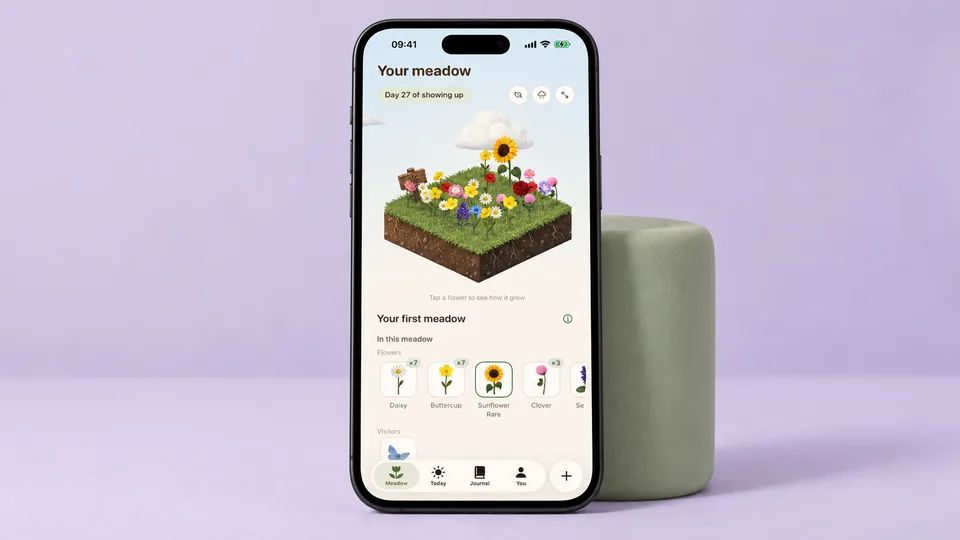
Some weekends you get out and some you don't, and it helps to see the ones you managed instead of dwelling on the ones you missed. A tick on a calendar does that. So does an app.
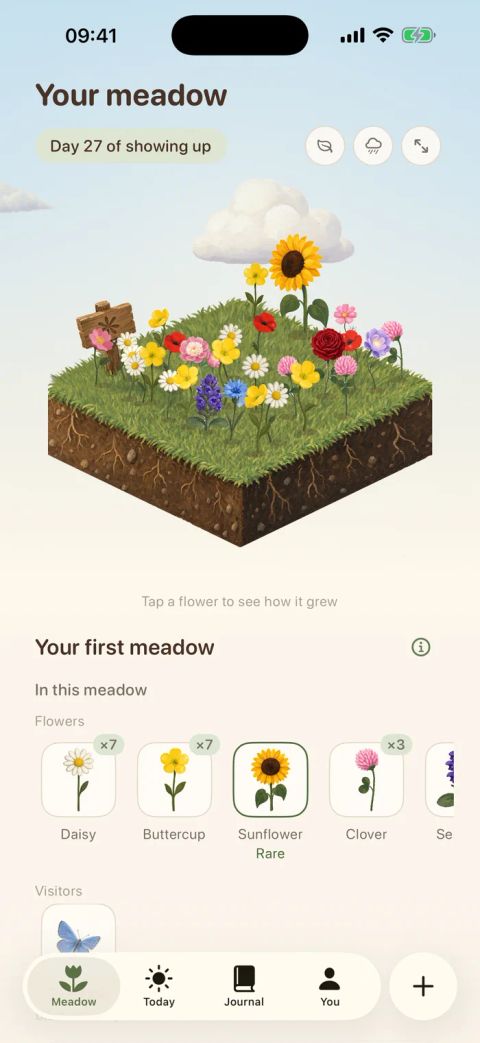
Meadow keeps that record for you. It's a movement and habit app for iPhone from Wildcard Wellness, with walking among its built-in activities, so you can log a hike with a timer, note your mood and energy, and watch a new wildflower bloom for the day you moved. It counts consistency, so there are no streaks, a rained-off weekend resets nothing, and your meadow is still there when you head out again.
Common questions
How long should my first hike be?
Shorter than you're tempted to make it. A couple of miles on easy, well-marked ground is plenty for a first outing, and finishing with energy left over is a much better sign than staggering back. You can always add distance next time once you know how your body handled it.
Do I need hiking boots to start?
No. Trainers with reasonable grip are fine for dry, gentle paths, and plenty of people hike in them for months before buying anything else. Boots or walking shoes earn their place when you move onto rough, wet or steep ground, and if you do buy a pair, wear them in on short walks before a long day so they don't rub.
How much water should I bring?
More than you expect to drink, and then a little extra. Sip regularly instead of waiting until you're thirsty, and add to what you carry for hot days, climbs and longer routes. If the trail passes a safe refill point, note it, but plan as though it doesn't.
Is hiking a good workout?
For most people, yes. It's aerobic exercise that also loads your legs on the climbs, so it works towards the CDC's weekly targets for both moderate activity and, on hilly ground, some strengthening. The pace and the terrain decide how hard it is, which is part of why the same trail can suit a beginner one month and feel easy the next.
Can I hike on my own?
You can, and many people love a solo walk. If you go alone, stick to well-used, well-marked routes to begin with, tell someone your plan and return time, and keep the distance within what you're sure you can manage. Building confidence on easy trails first makes solo hiking a lot more relaxed.
One thing to do today
Find a short, easy, well-marked route near you, save the map to your phone, and put it in the calendar for this weekend. Then send one person a message telling them where you'll be and when you'll be back. That's a hiking habit starting, with none of the pressure a big first trip would bring.
AUTHOR
Co-founder of Meadow.
Ash is co-founder of Meadow, a habit and movement tracking app that turns small acts of self-care into a growing wildflower meadow.
Little and often, with Meadow
Consistency, not intensity.
Meadow turns the movement you enjoy and the habits that help you feel good into a meadow of wildflowers. No streaks to break, and your flowers never wilt.
Download Meadow