A keystone habit is one habit that, once it sticks, tends to pull other good habits along with it. Start walking every day and you might find you eat a little better, wind down earlier and feel steadier by the evening, without setting out to change any of that on purpose.
The idea comes from Charles Duhigg, the journalist who wrote The Power of Habit. He put a name to something a lot of us have felt, that some changes are load-bearing, and getting one of them in place seems to make the rest easier. Duhigg described keystone habits as routines that "start a process that, over time, transforms everything".
That's the promise. The reality is more modest, and worth being straight about before you pin everything on one habit.
This guide covers what a keystone habit is, what the evidence does and doesn't show, the habits that tend to work as keystones, and how to pick and build one of your own.
What a keystone habit is
A keystone habit is an ordinary daily action that sits upstream of other choices, so doing it makes the next good choice a bit more likely.
Duhigg's case runs along three lines. The first is small wins. A keystone habit hands you a quick, repeatable sense of having done the thing, and that flicker of "done" builds the confidence to try the next change. The second is spillover, where the habit nudges the behaviours around it, so a morning walk makes the mid-morning biscuit a shade less automatic. The third is self-image. Once you're a person who walks every day, other choices start to line up behind that picture of yourself.
Making your bed is the example people quote most. In Duhigg's telling it's a tiny order-setting act that seems to travel into the rest of the day, and he linked it to better productivity and a stronger sense of wellbeing. The bed isn't magic. It's a small, early "done" that sets a tone.
The word to hold on to is tends. A keystone habit doesn't guarantee the rest of your habits fall into place. For a lot of people it's the starting point that makes the next thing easier to reach.
The honest evidence, and where it's thin
"Keystone habit" is Duhigg's phrase, built from reporting and case studies, not a term with a tidy stack of trials behind it. That doesn't make it wrong. It does mean the best examples in the book are stories, and a story always looks neater than the data underneath it.
The research that comes closest studies behavioural spillover, where changing one habit spreads to others. It does happen. Researchers who've reviewed it are blunt, though, that the effect is hard to pin down and far from automatic. Spillover tends to show up when people feel they chose the change themselves and have some support around them, and it often fades once the initial push stops. So a keystone habit can open a door to other changes. It won't drag them through on its own.
There's firmer ground under why a single habit can anchor a day at all. Wood and Neal's work shows that strong habits are set off by context, the place you're in and the action right before, far more than by how motivated you happen to feel. A daily walk that's always tied to the same moment becomes a fixed point in the day, and fixed points are useful things to build a routine around.
Keep the expectations honest and a keystone habit earns its place. Treat it as one magic domino and you'll be let down.
Keystone habits that tend to work
There's no official list, and the habit that acts as a keystone for you might do nothing for the person next to you. These are the ones people come back to, and each one brushes up against several other parts of the day.
- A daily walk. It gets you moving, out in daylight, and away from the screen for a bit, and it's about as low-friction as movement gets. Many people find a walk lifts their mood and settles their evening, which is why it shows up so often as a first domino. There's more in our guide to the benefits of walking.
- Making your bed. Thirty seconds, first thing, one visible win before the day has a chance to get away from you.
- A steady wake and sleep time. Going to bed and getting up at roughly the same hours props up almost everything else, from appetite to concentration, because so much of the body runs on that rhythm.
- One proper, sit-down meal. You don't need a full diet overhaul. One meal you eat at a table, slowly, tends to make you notice what and how much you're eating for the rest of the day.
- A short daily check-in. A minute noting your mood, or one line about how the day went, keeps you paying attention to yourself, and it's hard to drift far when you're checking in.
Pick the one that fits your life, not the one that sounds most impressive. A keystone habit only works if you'll do it.
How to pick your keystone habit
Not every habit has knock-on effects, so choosing well saves you chasing the wrong one for a month. Run a candidate through these three checks.
- Would you do it every day? A keystone habit needs to be daily to become a fixed point, so rule out anything you'd only manage twice a week.
- Does it lead somewhere? Picture your day after you've done it. If the habit naturally sets up other good choices, like a walk making an early night more likely, it's a strong candidate. If nothing follows, it's a fine habit but not a keystone.
- Is it yours? The habit-formation evidence points to self-chosen habits sticking better than ones handed to you, so pick something you have a reason to want, not something you feel you ought to do.
How to build it
Open our free printable: Small Habit Planner (PDF). Save or print it to use alongside this guide. No sign-up needed.
Once you've picked one, the building is the same craft as any other habit, and it helps to borrow the parts that work.
- Tie it to something you already do. The American Heart Association's advice is to attach a new action to an existing routine, so it rides along on a moment that already happens. After the morning kettle, after you drop the kids at school, after you close the laptop.
- Start smaller than feels serious. A ten-minute walk, not a daily 10,000-step target. You can grow it later. Right now you're building the showing-up, and a version that's too big is the fastest way to stop.
- Try the morning if it suits you. That same 2024 review found habits practised in the morning tended to come out stronger than the same habit done in the evening. It won't fit every life, so don't force it.
- Keep a simple mark. A meta-analysis of 138 studies found that tracking your progress towards a goal tends to improve how often you reach it. A tick on the calendar by the kettle is plenty.
As for how long the knock-on effects take, be patient. That 2024 review of habit formation found people reached automaticity in a median of two to three months, but the spread ran from a couple of weeks to nearly a year. There's no fixed number, so judge yourself by whether you're still turning up. We go deeper on timing in how long it takes to build a habit.
The version for a bad day
Decide now, while you're thinking clearly, what the habit shrinks to on a day when even the small version feels like too much. If your keystone habit is a daily walk, the bad-day version might be stepping out of the front door and round the block once. If it's making the bed, it's pulling the duvet straight and no more. This keeps the thread unbroken, which is the whole point of a keystone habit. Break the thread and there's nothing for the other habits to hang off.
Starting again after a miss
You'll miss days. One gap doesn't undo the weeks behind it, and the real damage is the story people tell afterwards, the "I've blown it now" that turns one skipped walk into a fortnight on the sofa. Keep the marks you've already made, forgive the miss, and do the next one at the very next chance.
How this differs from tiny habits
A keystone habit and a tiny habit answer two different questions. A keystone habit is about which habit to pick, the one with knock-on effects. A tiny habit is about how to make any habit stick, by shrinking it until it's almost too small to skip.
They work best together. Choose a keystone habit for its ripple, then build it the tiny way so it survives your worst days. If you want the shrinking method in full, our guide to tiny habits walks through it.
Watch your keystone habit build
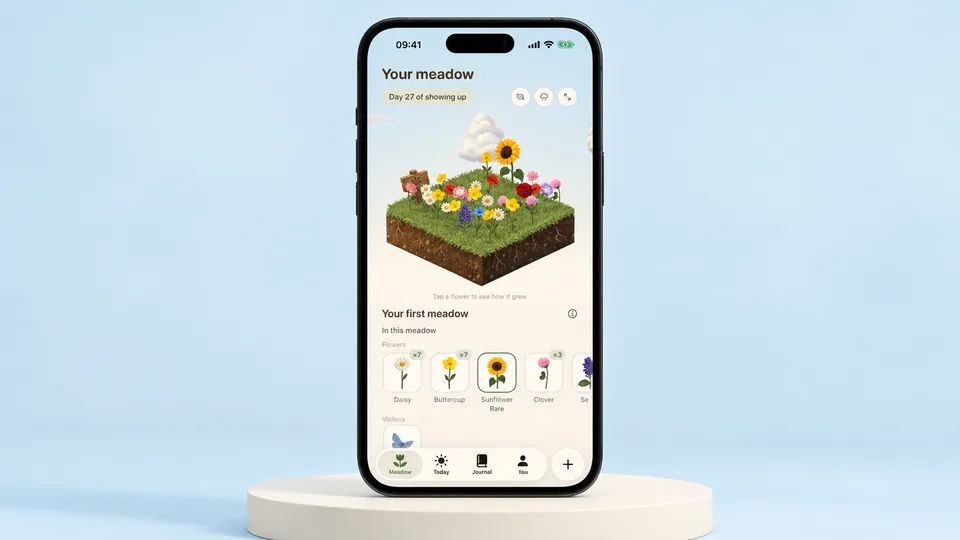
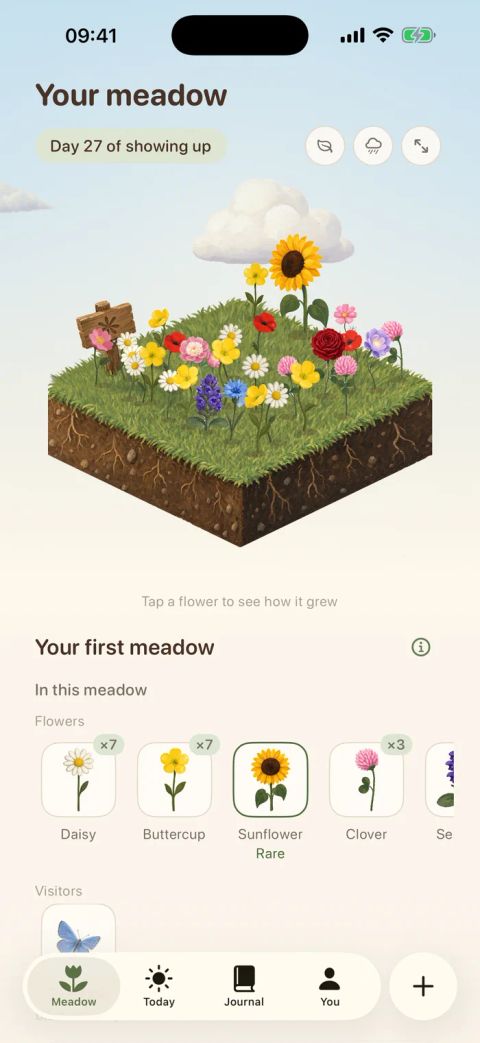
Some mornings go to plan and some fall apart, and a keystone habit needs to survive both. Meadow is a small iPhone app from Wildcard Wellness built around that reality. You log the walk, tick off the small daily habits, and note your mood and a daily win, and each day you show up grows a new wildflower in a meadow that's yours. Because a keystone habit is meant to be the fixed point everything else leans on, the no-streak design helps: miss a day and nothing resets, and your flowers never wilt, so a rained-off walk costs you nothing you've built.
A few common questions
How many keystone habits should I have? One, to start. The point of a keystone habit is the pull it has on everything else, and you can't tell whether it's pulling if you've changed five things at once. Get one running on its own before you add another.
How long before the knock-on effects show up? There's no set timeline. Habit formation itself takes a median of two to three months in the research, and spillover to other behaviours is slower and less certain than that. Look for small shifts over weeks, not overnight.
What if my keystone habit doesn't spread to anything? Then it's a good habit that happens not to be a keystone for you, which is fine. Keep it if you like it, and try a different candidate from the list above if you want the ripple.
Does making your bed count as a keystone habit? For some people, yes, as a small early win that sets a tone. For others it's a made bed and nothing more. That's the honest position on all of these: they tend to help, and none of them are guaranteed.
Pick one habit today, tie it to something you already do every morning, and keep it small enough to manage on a rough day. Write it in a single line, like "after the kettle goes on, a ten-minute walk", and start tomorrow.
AUTHOR
Co-founder of Meadow.
Ash is co-founder of Meadow, a habit and movement tracking app that turns small acts of self-care into a growing wildflower meadow.
Little and often, with Meadow
Consistency, not intensity.
Meadow turns the movement you enjoy and the habits that help you feel good into a meadow of wildflowers. No streaks to break, and your flowers never wilt.
Download Meadow