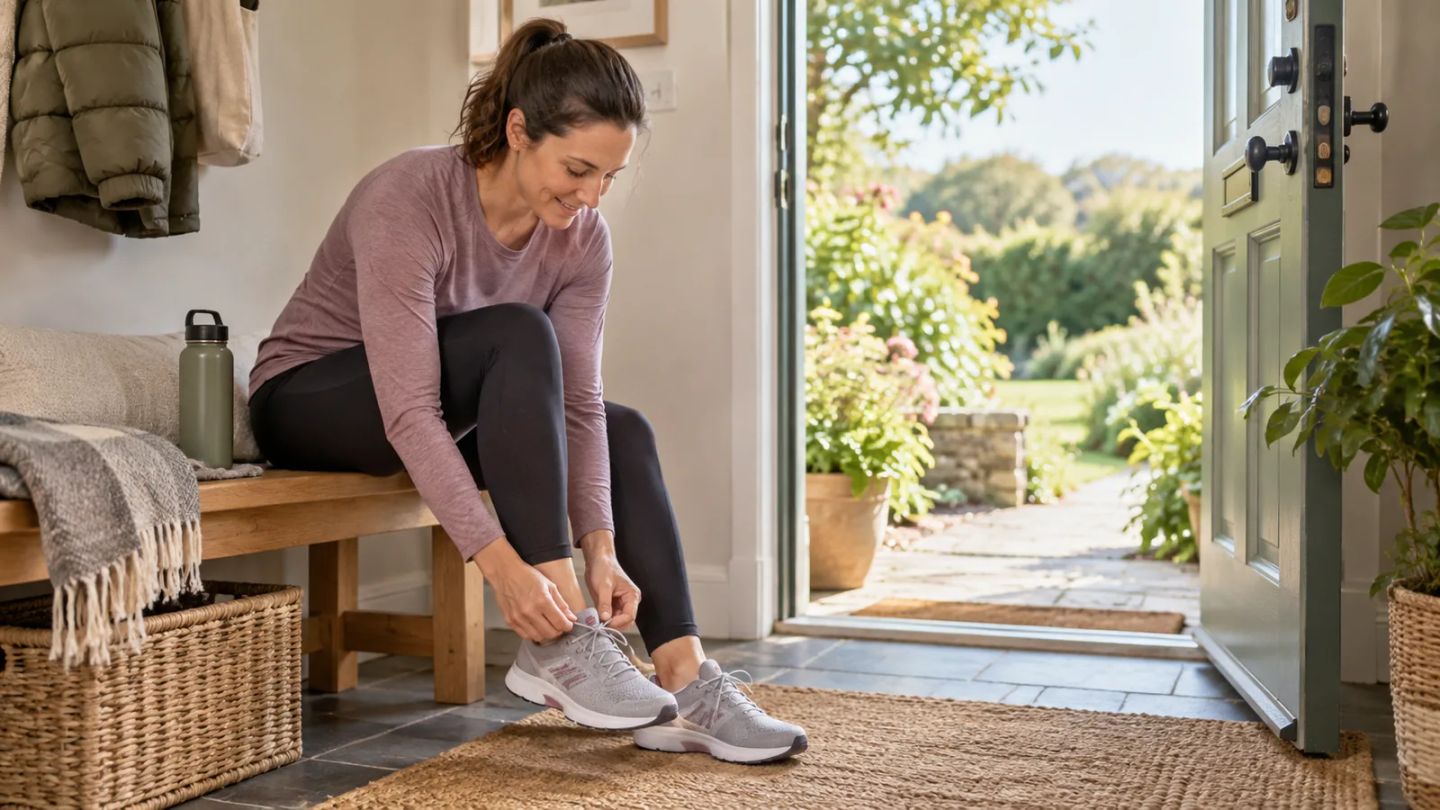
The best way to start exercising is to begin far smaller than feels sensible, with something you'd happily do on a bad day, and then repeat it until it sticks. A ten-minute walk after lunch, most days, is a real start. It beats the five-day plan you abandon in a fortnight.
If it's been years, or you never had a routine to begin with, the picture in your head of what exercise should look like is often the thing holding you back. Sweaty gyms, matching kit, an hour you can't spare. You can drop all of that and still get most of the benefit.
Here's how to begin, what to aim for, how to make it stick when life gets busy, and how to handle the days it falls apart. Nothing here needs a subscription, a plan, or a spare hour you don't have.
What counts, before it looks like a workout
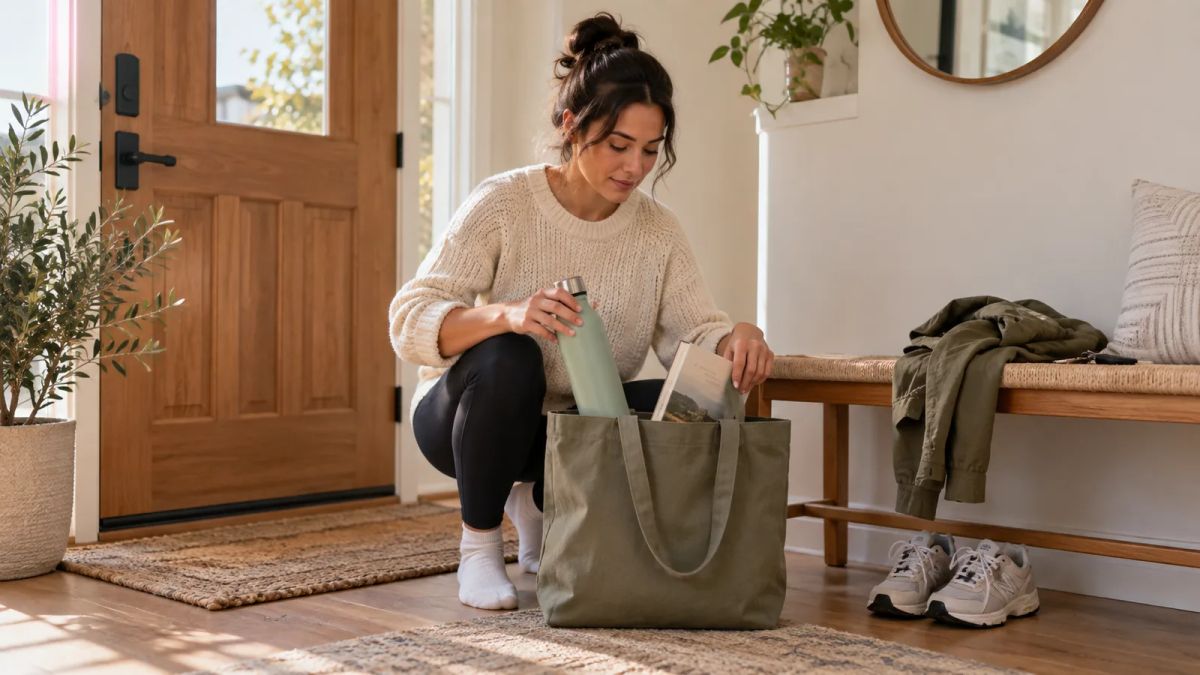
Movement counts long before it looks like exercise. Walking to the shop the long way. Dancing round the kitchen while dinner cooks. Gardening, taking the stairs, carrying the shopping in one trip, a few stretches while the kettle boils.
All of that does you real good. The World Health Organization is blunt about it: any amount of physical activity is better than none, and all of it counts. The CDC says the same, that adults who sit less and do any amount of moderate activity gain some health benefit.
The bar for day one is low. You don't need to earn the label "exercise" with pain or sweat. You need to move a bit more than you did yesterday, and do it again tomorrow.
Walking is where most people should start, because it needs no kit, no skill and no booking. Our guide to the benefits of walking covers why it does so much for so little.
Start smaller than feels sensible
The classic beginner mistake is doing too much, too soon, then hurting for three days and quietly giving up. Enthusiasm on day one writes cheques your body pays for on day three.
Victoria's Better Health Channel puts the fix plainly: start gently with a short session you feel you can manage, build with a number of short sessions, and increase the length and intensity gradually. Gradually means over weeks, not days.
Make your starting version almost too small to skip. Not thirty minutes but ten. Not a workout but a walk to the postbox and back. If a session ever feels like a big decision, it's too big. Shrink it until saying yes is easy.
Some stiffness a day or two after new activity is normal and passes. Pain that stops you moving for days, or a sharp pain during a movement, is a sign you overdid it or something is wrong, so ease off and let it settle. Our piece on tiny habits goes deeper on why the small version is the one that survives.
What to aim for, once you've begun
There's a target worth knowing, as a destination rather than a starting line. Health bodies across the UK, US and WHO broadly agree on it. The NHS recommends at least 150 minutes of moderate activity a week, spread over 4 to 5 days or every day, plus muscle-strengthening on at least 2 days. Moderate means you're a little out of breath but can still talk.
That can sound like a lot from a standing start, so remember two things. You can break it into small chunks across the day, and a short daily walk plus a couple of strength sessions gets you most of the way there. And whatever you manage below that number still counts. The goal is a direction to grow towards over months, not a rule you're failing until you hit it.
Make it stick when the week gets busy
Motivation shows up on good days and vanishes on the rest. What carries you through the flat weeks is a habit that doesn't ask you to decide each time.
The most reliable way to build one is to bolt the new thing onto something you already do without thinking. James Clear calls this habit stacking, and the formula is: after [current habit], I will [new habit]. After I pour my morning coffee, I stretch for two minutes. After I finish work, I walk round the block. The old routine becomes the reminder, so you're not relying on a spare scrap of willpower to nudge you.
It also helps to see the days add up. Clear keeps a simple habit tracker and marks each day he shows up, because a visible record of small wins pulls you back. One caution: a long streak counter feels great until you miss once, and a broken number can wipe out weeks of goodwill in an evening. You want a record that shows what you've built, not one that punishes a single gap. Our roundup of healthy habits has more small actions you can stack this way.
Watch the days you move add up
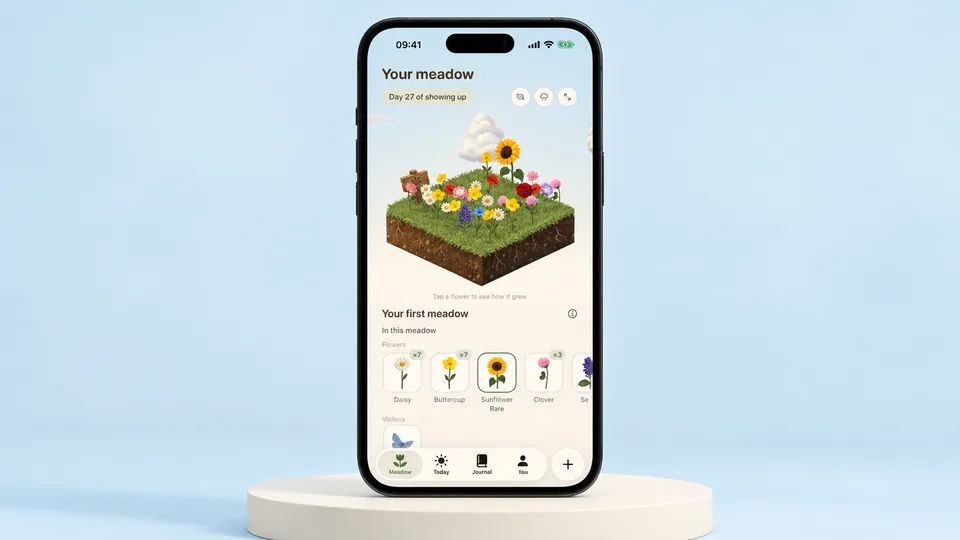
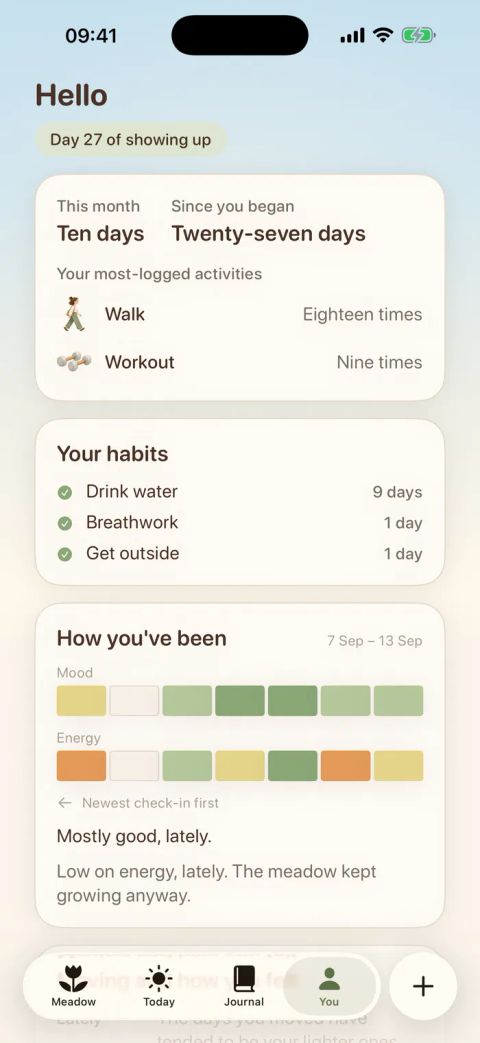
If you like seeing effort collect somewhere you can look at, Meadow turns each day you move into a wildflower. It's a gentle movement and habit app for iPhone. You log a walk or a few minutes of activity with a timer, tick off small daily habits, note your mood and energy, and your own meadow fills in over time, with rare flowers and little animal visitors turning up as it grows. There are no streaks, so a rained-off day or a missed week resets nothing and your flowers never wilt, which fits the stop-start reality of starting out.
Getting past what stops you
Most people who want to start already know they should. What trips them up is one of a handful of specific blockers. Here's how to handle the common ones.
No time
You almost certainly have ten minutes hidden in the day, and ten minutes counts. The CDC is clear that you don't have to do it all at once and can break activity into smaller chunks. Walk during a phone call. Do a short set of squats while the pasta cooks. Stack it onto a fixed point in your day so it borrows a slot that already exists.
No energy
Low energy is the day the smallest version earns its keep, not the day you skip. Movement often lifts energy instead of draining it, especially a short walk outdoors. Aim for the two-minute version and let it be enough. If two minutes turns into fifteen, lovely, and if it doesn't, you still moved and kept the thread going. Weaving small movement through an ordinary day is its own skill, and our guide to an active lifestyle is all about that quiet, low-effort kind.
The gym feels intimidating
You don't need a gym to start, and for many people it's the wrong first step anyway. A walk, a home stretch, a follow-along video in your living room all build the fitness and the confidence you'd want before a gym floor feels comfortable. Better Health Channel's whole point is to build confidence and fitness with short sessions first. Come to the gym later, if at all, once moving already feels normal.
Pain or a health condition
If you live with pain, an injury or a long-term condition, this is the one blocker to take to a professional. See your GP before you begin, and ask what's safe for you. Low-impact movement like walking, swimming or seated exercise is often a kind way in, but the right answer depends on your body, so get it from someone who knows your history.
Your first week, mapped out
Open our free printable: Your first week of movement (PDF). Save or print it to use alongside this guide. No sign-up needed.
A plan removes the daily "what should I do today" question. Here's a gentle first week for someone starting from very little. Every session is short on purpose.
Mon ☐ 10-minute walk after lunch
Tue ☐ 5 minutes of stretching after your morning coffee
Wed ☐ 10-minute walk after lunch
Thu ☐ Rest, or a slow potter round the garden
Fri ☐ 10-minute walk plus 5 chair squats and a wall push-up set
Sat ☐ Something you enjoy: a dance, a longer walk, a swim
Sun ☐ Rest, or gentle stretching
Build your own version by filling in the same shape, keeping each day small enough that a tired evening can't beat it:
My anchor (the thing I already do daily): ________
My movement (small enough for a bad day): ________
My bad-day version (when everything's gone wrong): ________
That bad-day version matters most. Decide now what counts when you're exhausted and behind. Maybe it's a walk to the end of the road, or two minutes of stretching. Having it ready means a rough day becomes a small win instead of a miss.
And you will miss. Everyone does. The rule worth borrowing from James Clear is never miss twice: one skipped day is an accident, two in a row is the start of a new pattern. So when you slip, don't wait for Monday. Do the smallest version at the next chance you get. Real-world habit research is reassuring here too, since one study following people building daily habits found a single missed day made little difference to how automatic the behaviour eventually became.
When to check with your GP first
Most people can start walking and gentle movement safely today. Some should have a word with a professional first.
The NHS advises you to speak to your GP if you haven't exercised for some time, or if you have medical conditions or concerns, and to make sure your activity and its intensity suit your fitness. That's worth doing if you're returning after a long gap, are pregnant, have a heart or lung condition, joint problems, or you're carrying a lot of extra weight.
Stop and get medical advice if activity brings on chest pain, unusual breathlessness, dizziness or faintness. Those aren't part of getting fit and shouldn't be pushed through.
Common questions
How often should a beginner exercise? Start with something small on most days, and treat one or two of those as slightly longer or including a little strength work. Daily movement in tiny doses is easier to keep up than three big sessions you dread. Build the frequency first and the length later.
How long until it gets easier? Sooner than you'd think for the breathlessness, longer for the habit. The first walks feel harder than the ones a fortnight in. As for the habit clicking into place, there's no honest fixed number, and time-to-automatic varies enormously between people and activities, so judge yourself by whether you're still showing up, not by whether it feels effortless yet.
Do I need a gym or any equipment? No. A pair of shoes you can walk in covers the start. Strength work can be bodyweight to begin with, using squats, wall push-ups and standing up from a chair without hands. Add equipment only when you've got a habit to hang it on.
Is it too late to start if I'm very unfit? No. The guidance from the NHS, CDC and WHO all point the same way, that any movement is better than none and the benefits begin at low levels. Starting unfit means the early gains come quickly, because your body has the most to respond to.
What if I miss a whole week? Nothing is lost that a restart won't recover. Skip the guilt and go back to your bad-day version at the next opportunity. A week off is a pause, and the only version that fails is the one you never come back to.
Right now, pick one thing you already do every day, coffee, lunch, finishing work, and decide to take a ten-minute walk straight after it tomorrow. Write it down where you'll see it, then do that one walk. That's the whole start.
AUTHOR
Co-founder of Meadow.
Ash is co-founder of Meadow, a habit and movement tracking app that turns small acts of self-care into a growing wildflower meadow.
See how far you've come
Your habits, moods and little wins, all in one place
Meadow keeps track of the walks, the water and the good days, so you can look back and watch your effort add up.
Download Meadow