Strength training keeps the muscle, bone and everyday capability that slip away as the years pass, and you can start it at home this week with nothing but your own body weight. It's for anyone, at any age, whether you're 25 and never lifted a thing or 75 and worried it's too late. It isn't.
Most beginners picture a gym full of clanging metal and people who know what they're doing. You can skip all of that. A handful of simple moves, done twice a week, will make you stronger, steadier on your feet and more able to carry your own shopping up the stairs.
Here's why it's worth the effort at any age, a real starter routine you can do in your living room, how to get a bit stronger over time, and how to keep it going once the novelty wears off.
Why strength training earns its place at any age
From your thirties onward, you slowly lose muscle if you do nothing to keep it. That loss speeds up later in life, and it's a big part of why some older people struggle to rise from a chair or steady themselves when they trip. Lifting, pushing and carrying against a bit of resistance tells your body to hold on to that muscle and build more.
The benefits reach past the muscle itself. Harvard Health puts the link plainly: strong muscles lead to strong bones, and strength training can slow bone loss and even build bone, which lowers the risk of a fracture from osteoporosis. The same resistance work that thickens muscle also loads the skeleton, and bone responds by getting denser.
There's a metabolic side too. Muscle is hungry tissue, so carrying more of it lifts the number of calories you burn at rest. Cleveland Clinic notes that strength work helps raise your resting metabolic rate alongside building strength and easing some joint pain.
Then there's the part you feel every day. Getting off the floor, lifting a toddler, hauling a suitcase into the overhead locker, walking downhill without your knees complaining. That's everyday function, and it's the first thing to fade when you stop challenging your body and the first thing to come back when you start. If exercise as a whole feels daunting, our guide to how to start exercising covers the wider picture. This piece stays on strength.
Start with your body weight, not a barbell
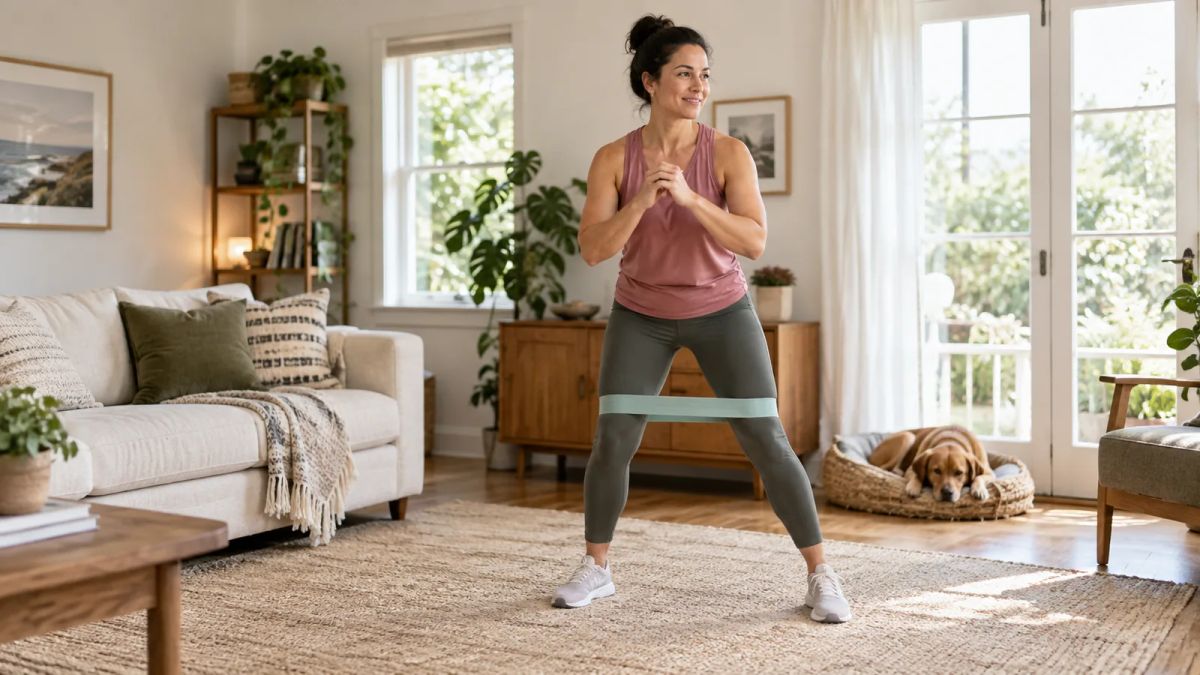
You don't need a gym, and for most people it's the wrong first stop anyway. Cleveland Clinic's advice for beginners is to start with body weight or resistance band exercises to learn proper movement and form before you touch a dumbbell.
Your body weight is plenty of resistance when you're new. A squat, a push-up against the wall, standing up from a chair without using your hands. These build the movement patterns and the base strength you'll want before adding load, and they're free.
There's good news buried in the research here. A review of untrained people found that early strength gains come largely from enhancements in motor learning and coordination, which is why light, bodyweight work makes beginners noticeably stronger in the first weeks. Your nervous system gets better at recruiting the muscle you already have. The heavier stuff can wait.
A starter full-body routine
Open our free printable: Your strength session record (PDF). Save or print it to use alongside this guide. No sign-up needed.
Here's a full-body session built from five movement patterns that between them work your legs, hips, back, chest, shoulders, arms and grip. That spread matters, because the CDC and NHS both recommend working all the major muscle groups, meaning legs, hips, back, abdomen, chest, shoulders and arms, on at least two days a week.
Do the five in order. Rest about a minute between sets. The whole thing takes fifteen to twenty minutes.
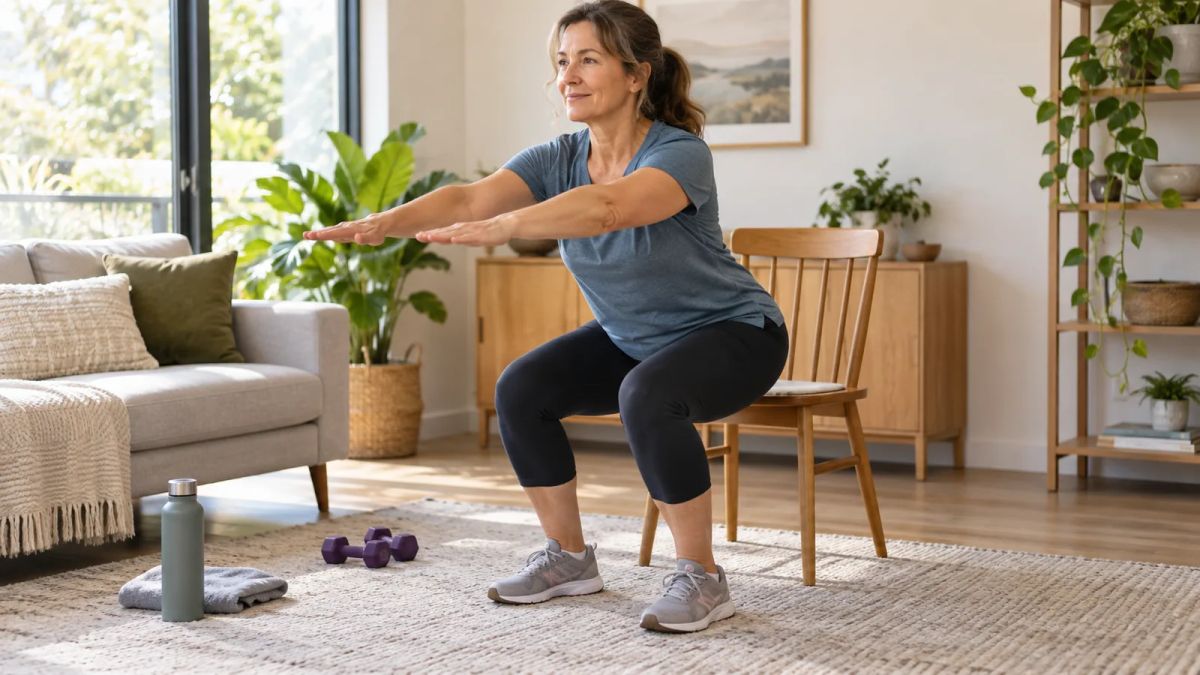
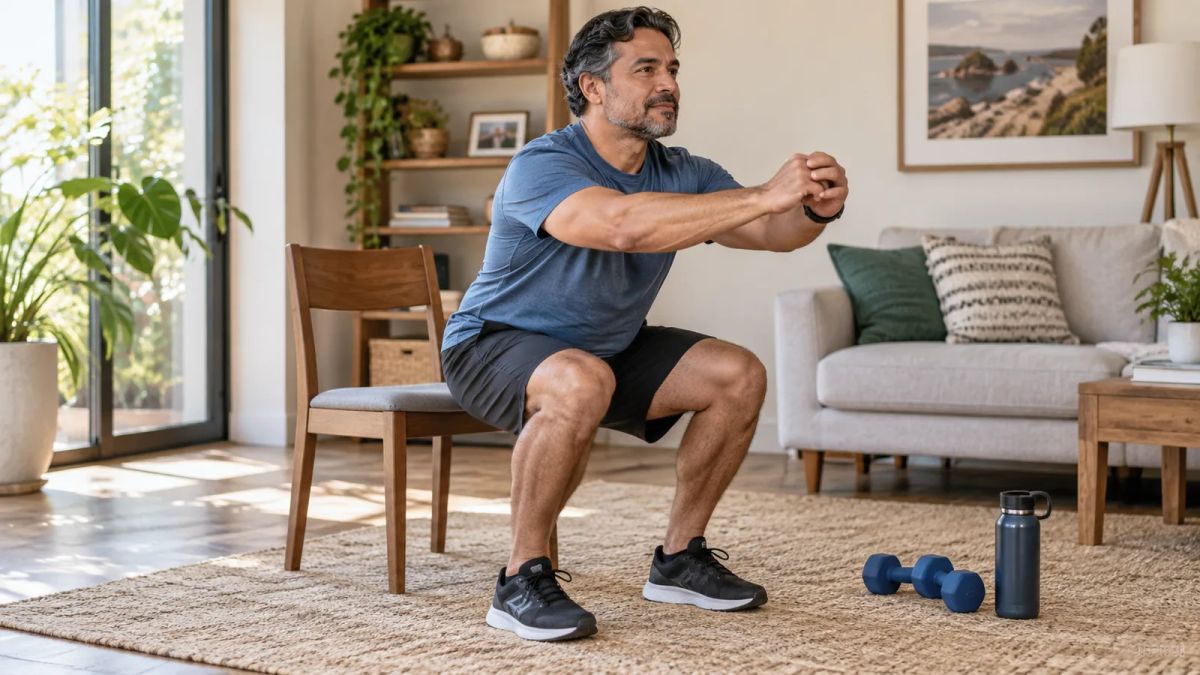
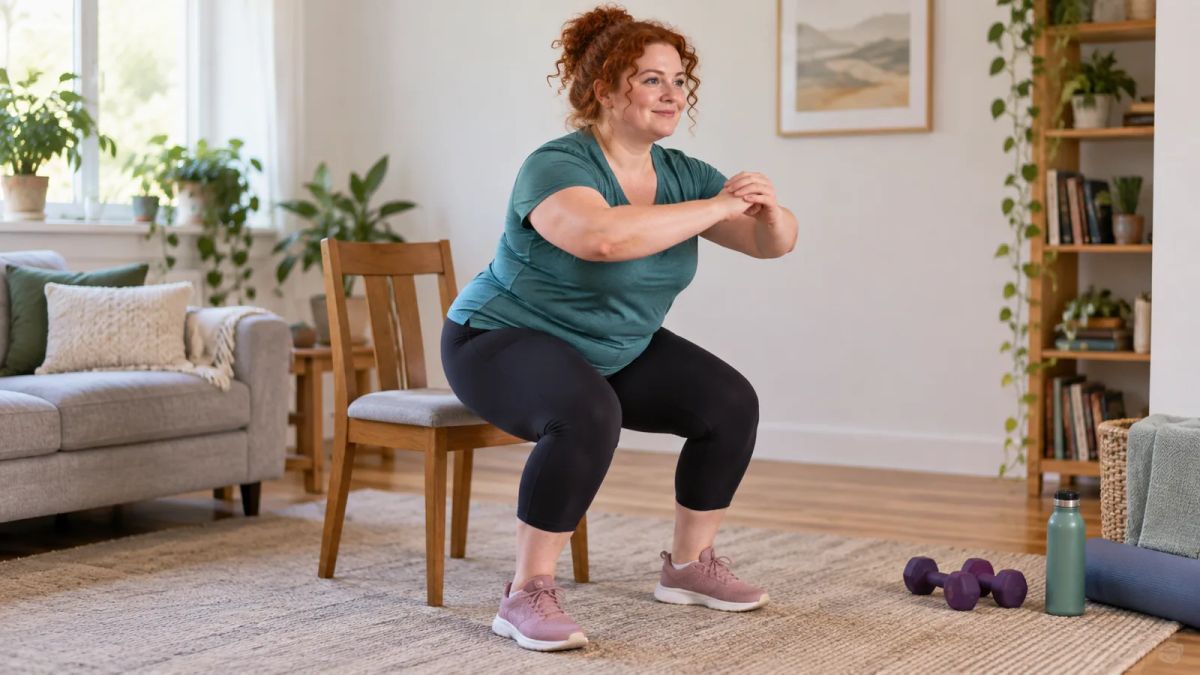
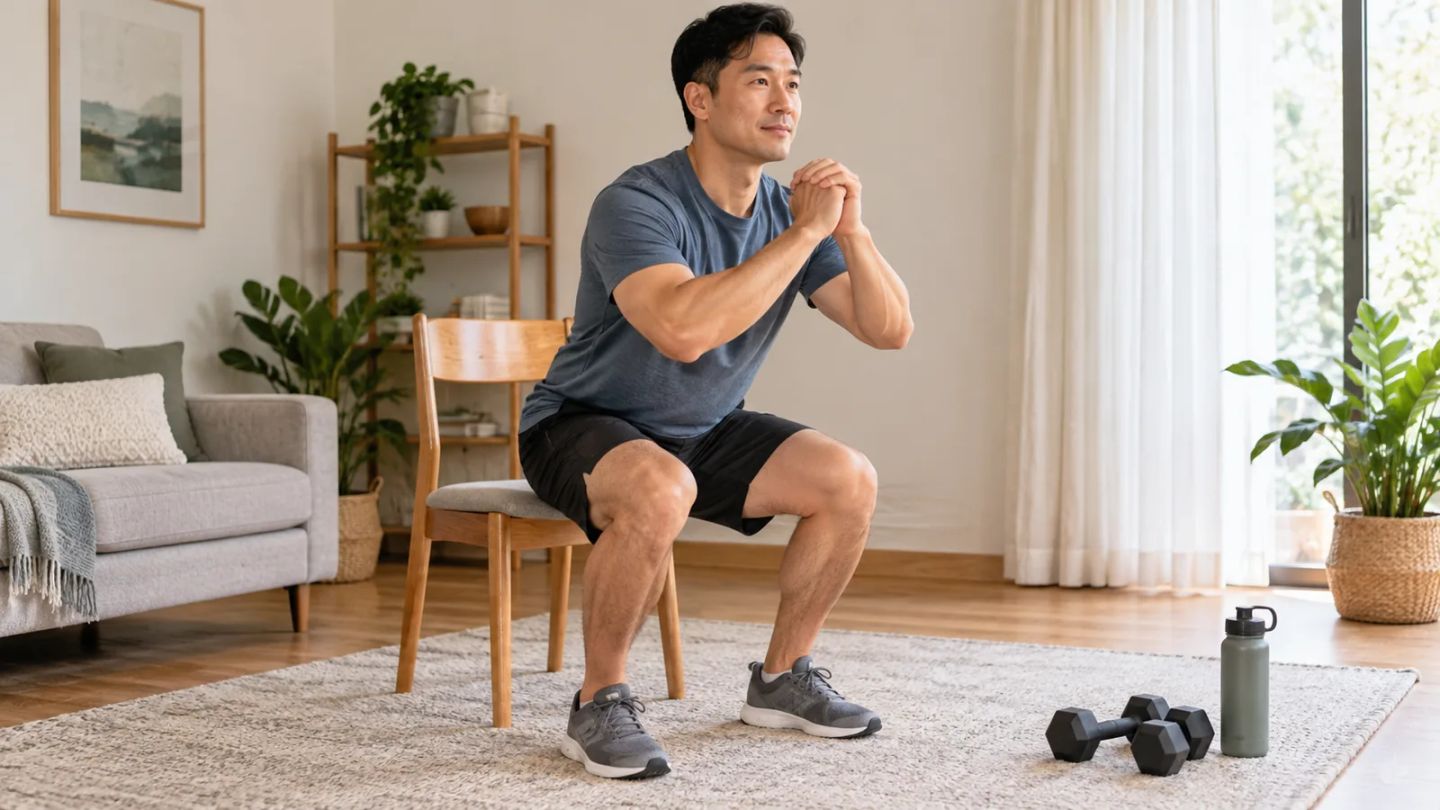
1. Squat (legs)
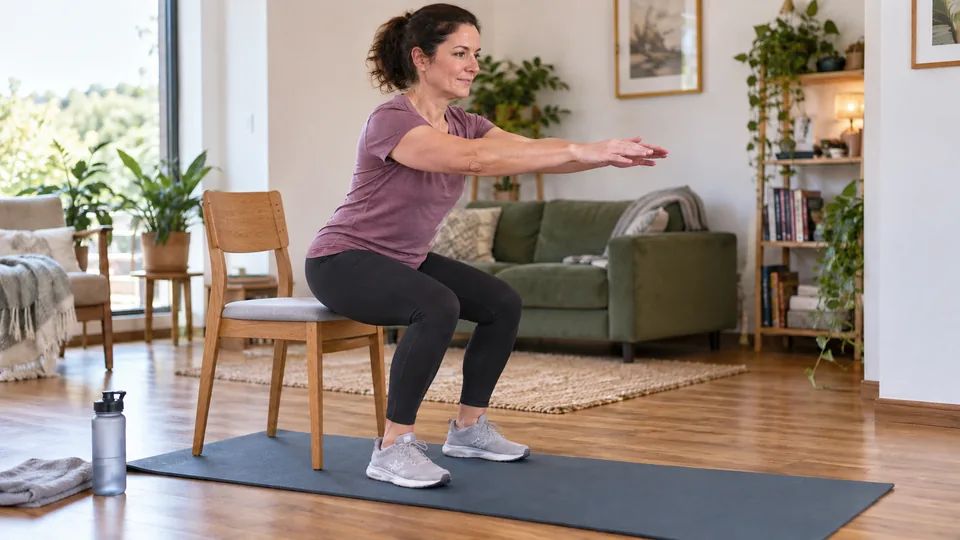
Sit down onto a sturdy chair and stand back up without using your hands, or lower into a squat and rise if that feels easy. Do 2 sets of 8 to 12.
2. Hinge (back of the legs and glutes)
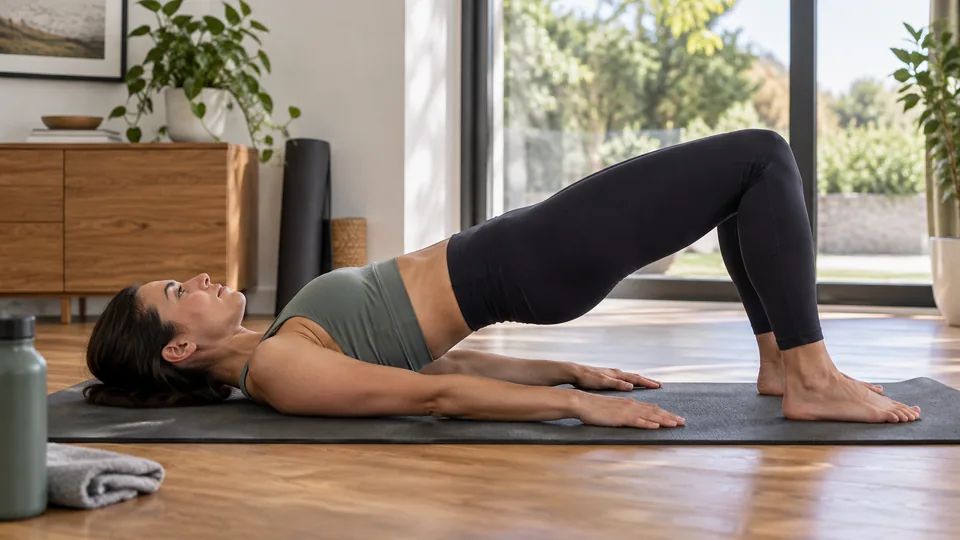
Lie on your back, feet flat, and lift your hips into a glute bridge, squeezing at the top. Do 2 sets of 8 to 12.
3. Push (chest, shoulders, arms)
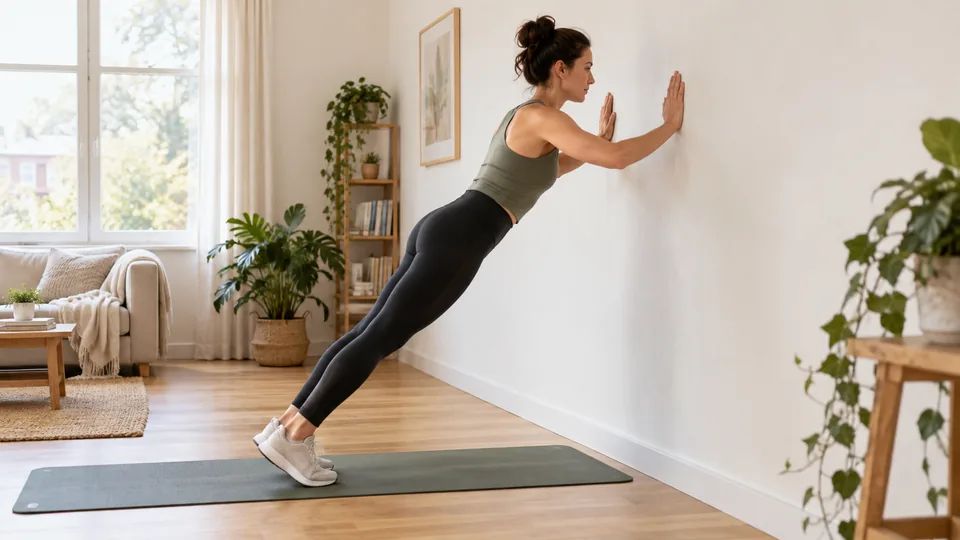
Push-ups against a wall or a kitchen counter, or on your knees on the floor. Do 2 sets of 5 to 10.
4. Pull (upper back)
Loop a resistance band round a door handle and row it towards your ribs, or row a couple of heavy shopping bags up towards your waist while bent at the hips. Do 2 sets of 8 to 12.
5. Carry (grip, core, whole body)
Pick up something heavy, a full water bottle in each hand or a loaded bag, and walk with it for 20 to 30 seconds, standing tall. Do this twice.
Aim to finish each set feeling like you had one or two more reps in the tank. Cleveland Clinic suggests beginners work up to two sets of eight to 15 repetitions per exercise, so the numbers above give you room to grow. If a move is too hard, shrink it. Wall push-ups instead of floor ones. A higher chair for the squat. Meet yourself where you are today.
On a rotten day when the full routine feels like too much, do one round of the squat and the push and nothing else. Two moves, five minutes. That's the version that keeps the habit alive when everything else has gone sideways.
Progressive overload, in plain English
Progressive overload sounds technical. It means giving your muscles slightly more to do over time, so they keep adapting instead of settling.
Once a session starts to feel comfortable, you nudge it up. There are a few ways to do that, and you only need one at a time. Add a repetition or two. Add a third set. Slow the movement down so the muscle works longer. Or add weight, a heavier bag, a thicker band, a pair of dumbbells.
You might assume weight is the only lever that counts. It isn't. One study comparing the two approaches found that adding repetitions built muscle and strength about as well as adding load over an eight-week block. So when heavier weight isn't handy, doing more reps with what you've got keeps you moving forward.
The NHS frames the effort level well: work to the point where you need a short rest before repeating the activity. If ten squats leaves you barely warm, it's time to add a few or slow them down.
How often, and how much rest
Two days a week is the floor and a fine place to start. The CDC guidance is muscle-strengthening on two or more days a week, on top of the 150 minutes of moderate aerobic activity like brisk walking. You can do all five moves in one full-body session and repeat it two or three times across the week.
Leave at least a day between sessions that hit the same muscles. That gap is when the muscle repairs and comes back a little stronger, so rest is part of the training, not a break from it. Two full-body sessions with two or three days between them works well for most beginners.
A bit of muscle soreness a day or two after a new session is normal and fades. Sharp pain during a movement, or an ache that lingers for days, is a sign you pushed too hard, so ease back next time.
Getting the form right, and staying safe
Slow and controlled beats fast and heavy every time you're learning. Lower under control, pause, then rise. Breathe out on the effort. Keep the movement smooth rather than jerky, and stop a set the moment your form falls apart.
Warm up first with a few minutes of easy movement, some arm circles, a walk on the spot, a gentle version of each exercise. If you're new to moving your joints through their full range, our guide to a low-impact workout pairs well with strength days, and older beginners may want to start with the gentle work in our mobility exercises for seniors.
One honest caveat. If you live with a heart condition, joint problems, are pregnant, or you haven't exercised in a long while, have a word with your GP before you begin and ask what's safe for you. Strength training is safe and helpful for the vast majority of people, including well into old age, but the right starting point depends on your body, so get that from someone who knows your history.
Keep the two sessions a week going
The hard part isn't the squats. It's still doing them in six weeks, when the early enthusiasm has cooled and a wet Tuesday is doing its best to talk you out of it.
Anchoring the session to something fixed helps. After Sunday lunch, after your Wednesday evening shower, whenever there's a slot that already exists in your week. And seeing the sessions add up gives you something to come back to.
Watch your sessions collect somewhere
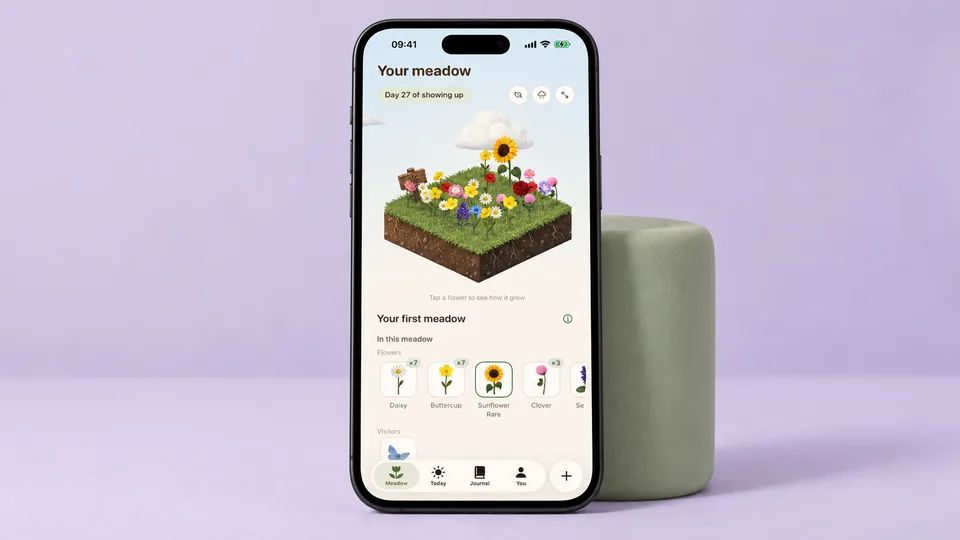
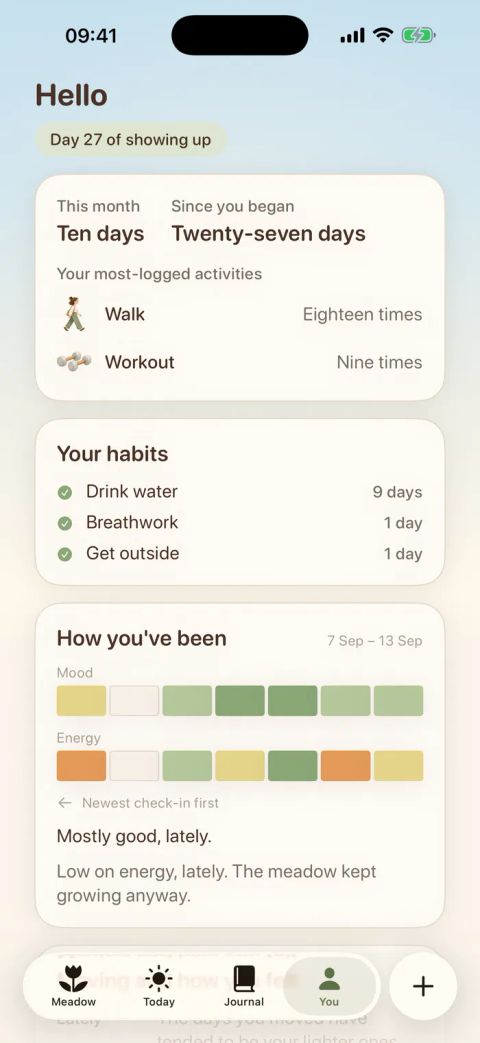
If a record on your phone helps you show up, Meadow turns each strength session into a wildflower. It's a gentle movement and habit app for iPhone. You log the session with a timer, tick off small daily habits, note your mood and energy, and your own meadow fills in over the weeks, with rare flowers and little animal visitors appearing as it grows. There are no streaks, so the week you manage one session instead of two resets nothing and your flowers never wilt. That fits the stop-start reality of building a new habit, where a missed week is a pause and not a failure.
When you do miss, and you will, don't wait for a fresh Monday to atone. Do the two-move version at the next chance you get. A single skipped session is nothing. Skipping quietly for a fortnight is how the whole thing slides, so the trick is to come back small and soon.
Common questions
Do I need weights or a gym to start? No. Your body weight covers the first several weeks, and a resistance band plus a couple of heavy household items will take you a good deal further. Buy equipment once you've got a habit to hang it on.
How long until I notice a difference? Strength often improves within the first four to six weeks, because your nervous system gets better at using the muscle you have before the muscle itself visibly grows. Visible changes in muscle size take longer and vary a lot between people, so judge yourself on whether the moves are getting easier, not on the mirror.
Is it safe to start strength training in my sixties or seventies? For most people, yes, and the benefits for muscle, bone and balance are worth having at that age. Check with your GP first if you have a health condition or haven't exercised in a while, then start light and build slowly.
How is this different from walking or cardio? They do different jobs and work best together. Walking trains your heart and lungs, strength work keeps your muscle and bone. The physical activity guidelines ask for both, aerobic movement most days plus strengthening on two.
Will lifting make me bulky? Building noticeable size takes years of dedicated, heavy, high-volume training and a lot of food. Twice-weekly bodyweight and light resistance work will make you stronger and more toned, not big.
Right now, stand up from your chair and sit back down slowly, without using your hands, eight times. That's your first set of squats. Do one more set after this, and you've started.
AUTHOR
Co-founder of Meadow.
Ash is co-founder of Meadow, a habit and movement tracking app that turns small acts of self-care into a growing wildflower meadow.
See how far you've come
Your habits, moods and little wins, all in one place
Meadow keeps track of the walks, the water and the good days, so you can look back and watch your effort add up.
Download Meadow